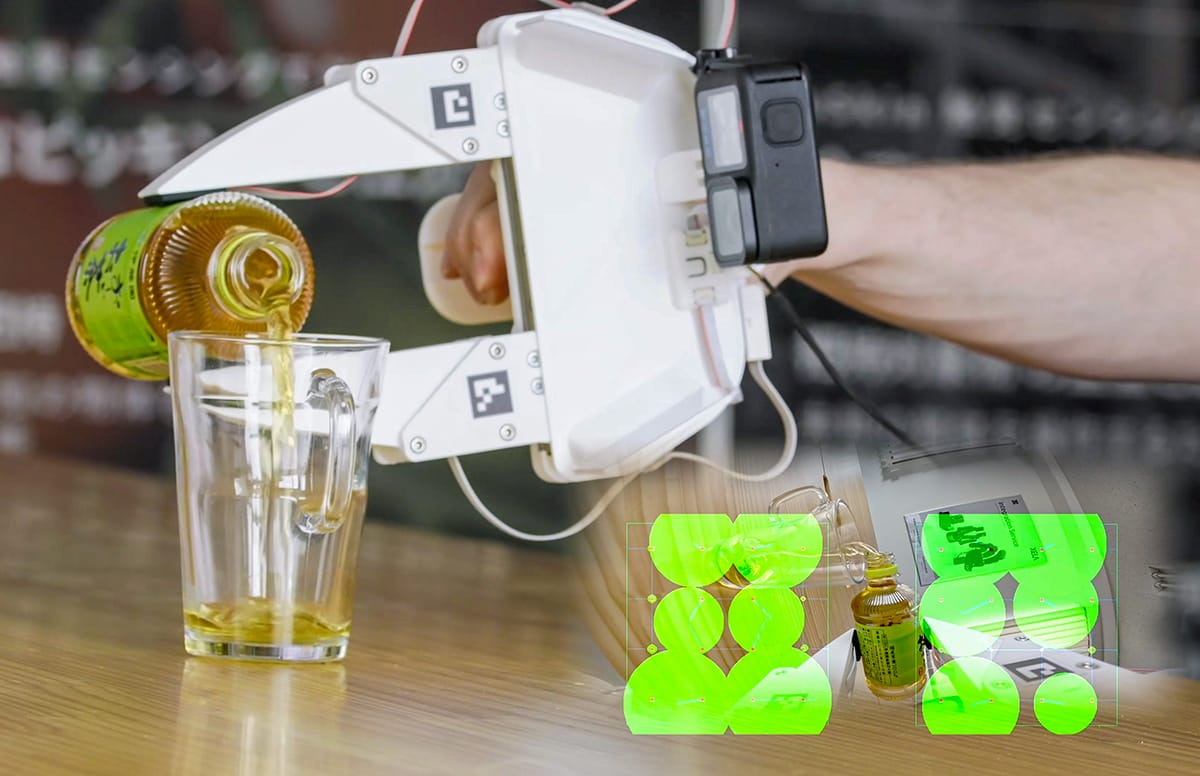
A robot fumbles a part, and the reflex diagnosis is always the same — the gripper is too weak, crank up the clamping force. A piece published by The Robot Report on September 6, 2026 argues the opposite: most gripping failures are not a muscle problem at all. They are a feedback problem. The hand has no idea what is actually happening at the moment of contact.
The proposed cure is the pressure sensor — a sensing layer built into the gripper’s finger pads that measures distributed mechanical stress right at the contact interface. That placement is the whole point. It is a local measurement, taken where the part and the fingertip actually meet.
Compare that with the usual approach. A force-torque sensor bolted to the wrist gives, in the article’s words, “a global measurement” — it registers that something is loading the arm, but “it cannot resolve what happens at individual fingertips.” Uneven loading across two fingers, the classic prelude to a dropped item, is invisible to it. Full tactile skins can see that detail, but they bring cost and complexity; pressure sensing is pitched as the middle ground between simplicity and spatial resolution.
What the sensor buys you is a readable narrative of the grasp, from first contact through surface deformation and micro slips, on to load redistribution, and finally to a stable hold — or a failure. Each stage has a signature:
- First contact — the moment the fingers touch, rather than the moment the encoder says they should have.
- Surface deformation — how the object yields under the pads.
- Load redistribution — pressure migrating across the pad as the part shifts.
- Stable hold or failure — the endgame, flagged early instead of after the crash.
That stream lets a gripper cross the line from motion control to interaction control: it stops blindly executing a trajectory and starts negotiating with the object. Slip detection is the showcase. As the article puts it, “slip does not always produce a large force change but it does produce characteristic micro variations in pressure distribution.” Catch those and you can tighten in time — and timing is brutally tight, because “a few tens of milliseconds difference in detection time can determine whether a part is recovered or dropped.”
None of which comes free. The article catalogues the failure modes engineers actually hit:
- Mechanical noise and vibration bleeding into the signal.
- Hysteresis in elastomer-based sensing pads.
- Saturation under aggressive gripping, where the signal simply flatlines.
- Calibration drift — elastomeric finger pads creep, so the baseline reading wanders.
- Processing latency, which eats the reaction window described above.
Hence the closing advice, which reads like hard-won shop-floor wisdom: in bin picking, kitting and mixed-part handling, the deployments that succeed are the ones that prize durability and predictable system behavior over headline sensor specifications. The best sensor on the datasheet is rarely the one still working in month eighteen.