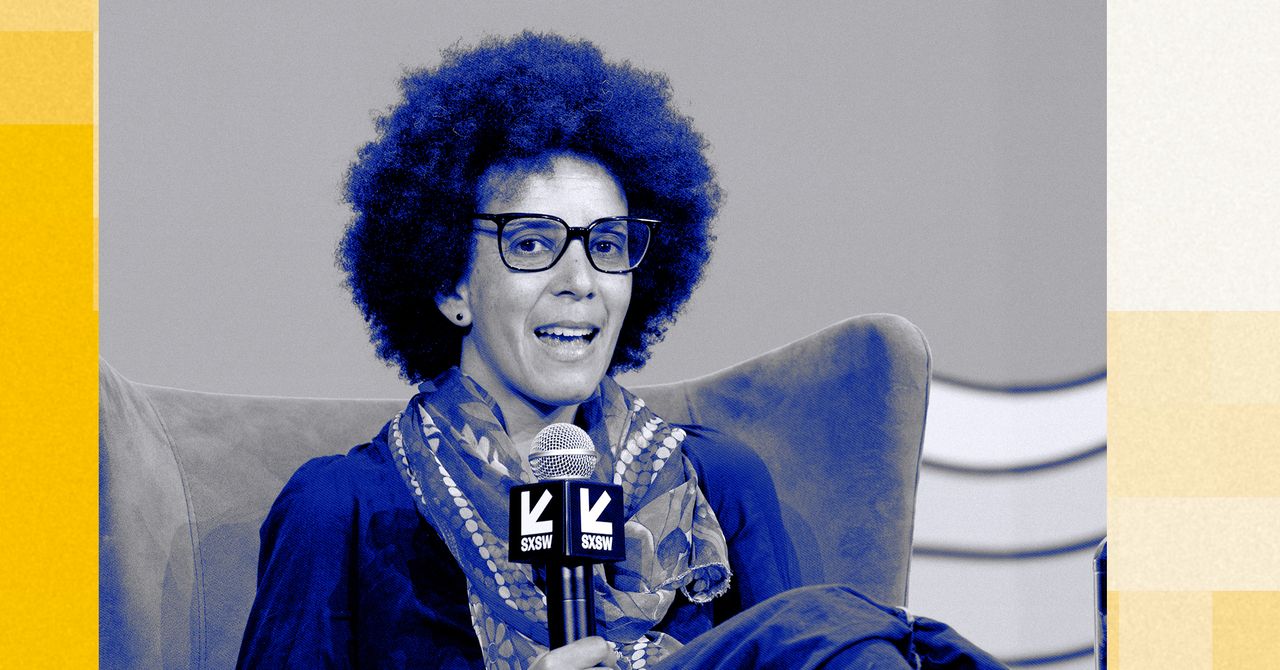
Two industry fights broke out in the second week of September 2026, and Timnit Gebru argues that both were framed around the wrong question. First came OpenAI’s claim to have cracked an open million-dollar math problem, followed by accusations that it had leaned on other researchers’ work. Then, on September 8, 2026, Anthropic researcher Jacob Coxon resigned, warning that both Anthropic and OpenAI are “gambling with our lives.” Another technical staffer at Anthropic replied that people at the company “really do earnestly believe AI could kill all humans!” adding, “I personally think it is >10% within the next decade.” Gebru, speaking to Lauren Goode for WIRED’s Backchannel newsletter, reads the whole episode as theater.
Start with the benchmark itself. Gebru asks why labs pour resources into math, programming and chess, disciplines that get elevated into proof that intelligence has been solved. An open $1 million question makes for a cleaner headline than a slow verification process. Had the claim gone through the way the math community normally vets novelty, significance and authorship, she says, everyone would have a better sense of whether the breakthrough was framed accurately. She points to the Leiden Declaration, which warns about what happens when corporations use mathematics this way and policymakers start relying on press releases instead of talking to mathematicians. The gap between a lab claiming a breakthrough and Bernie Sanders drafting a bill, she notes, has become very short.
She blames the pending IPOs for the change in temperature. Researchers used to collaborate across Google, Microsoft and Amazon as a matter of course; now, she says, they are frenetic about the problems they think they are solving.
On extinction talk, her position has not moved since 2021, when she co-authored the stochastic parrots paper in response to OpenAI declaring GPT-2 too powerful to release. In her forthcoming book she puts it as a question: “Can a bridge decide to collapse?” Nobody asks whether a collapsed bridge was sentient or ethical. They ask who built it that flimsy, which permits were pulled and which tests were skipped. Treating a model as the agent, she argues, loses the thread.
What she considers genuinely existential is more mundane and already running:
- AI powering autonomous weapons that are in active use in warfare
- climate damage worsened by what the industry is building
- bosses using AI as the excuse to cut workers
- chemical weapons built by people with new tooling; WIRED notes that shortly after the interview Anthropic disclosed it had blocked several potential malicious attempts by scientists to build biological weapons
Obsessing over the machine-god, she suggests, is a privilege available to people not worried about floods, warfare or police brutality. She has a party trick for this: read out old quotes about artificial intelligence and ask which decade produced them. People guess wrong, because it all sounds the same. The singularity, as she puts it, has been coming for decades.
Gebru was hired at Google in 2018 to evaluate biases in its AI tools, and left not long after the company rejected her team’s paper. Her account of it, Deep Unlearning: The Rise of AI and the Radicalization of a Tech Idealist, is listed by Verso as a 320-page hardback for March 2, 2027.