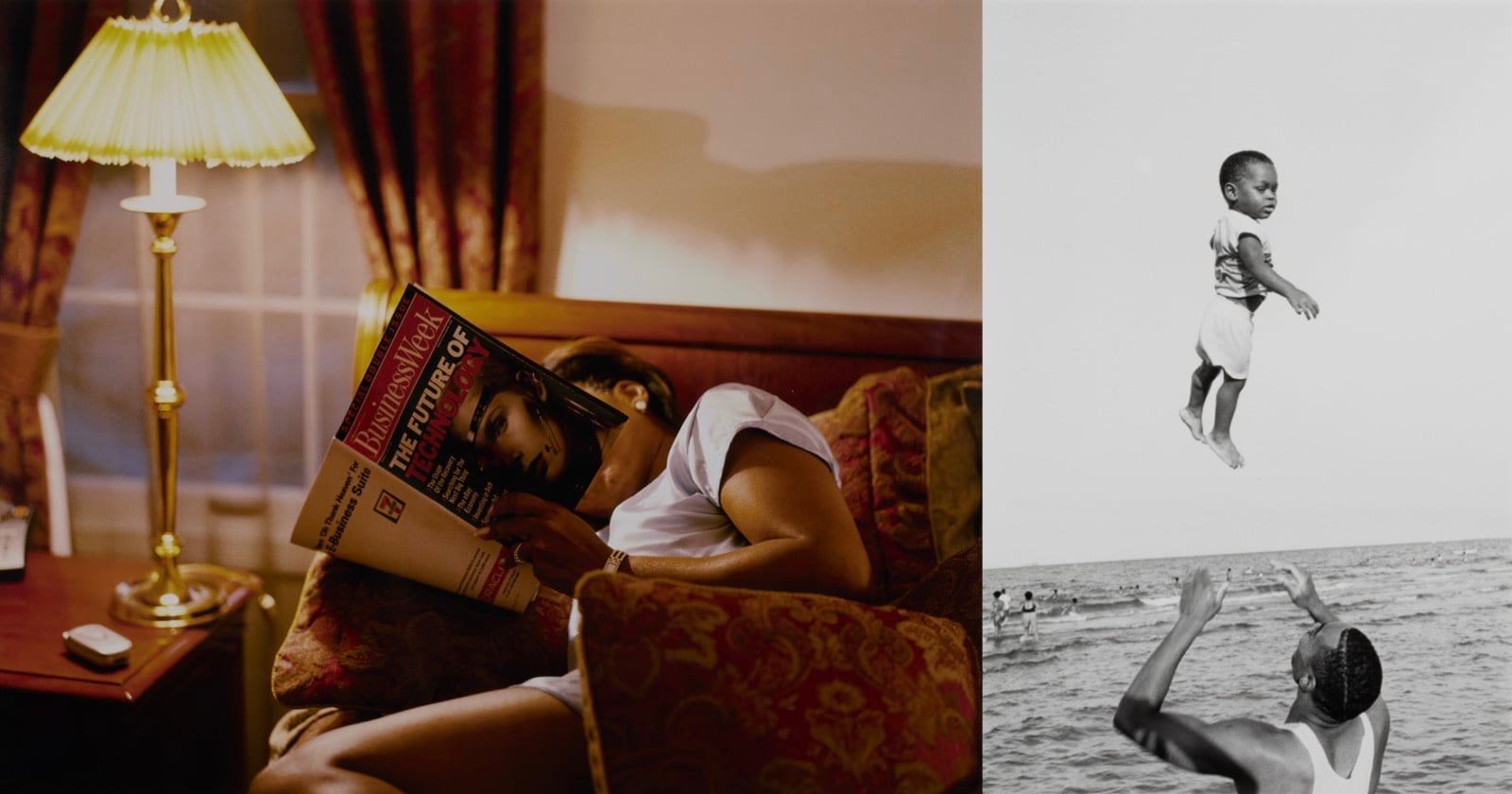
There is not a single photograph of Emmett Till in the exhibition named after him. That absence is the whole point. If Emmett Till Lived: Freedom on American Ground opened at the Museum of Contemporary Photography at Columbia College Chicago on September 10, 2026 and runs through December 19, 2026, and instead of documenting a death it assembles, frame by frame, the seven decades of ordinary existence that were taken from a 14-year-old boy in Mississippi in 1955.
The raw material is the museum’s own permanent collection, mined for images that could plausibly belong to a biography that never happened. Work by more than 110 artists is in the show, spanning generations from Henri Cartier-Bresson and Dorothea Lange to Gordon Parks, Dawoud Bey, Carrie Mae Weems, Teju Cole, Laylah Amatullah Barrayn and Stephen Marc. The sequence moves the way a life does: railroad lines and journeys across the U.S., street corners and neighborhoods, marriage, fatherhood, and then the public landmarks a man born in 1941 would have lived through, including Michael Jordan’s run with the Chicago Bulls and Barack Obama’s election.
Guest curator Sarah Elizabeth Lewis built the show in collaboration with Till’s cousin Reverend Wheeler Parker, Jr., with the MoCP’s chief curator and deputy director Karen Irvine as coordinating curator. The framing is deliberately counterfactual rather than commemorative. “The exhibition shifts away from the violence that ended his life to the possibilities that were taken from him,” Irvine told The Art Newspaper.
The history the show leans against is still brutally specific. Till was visiting family in Mississippi when he was abducted, beaten and lynched after a white woman claimed he had harassed her at a store; the acquittal of his killers turned the case into a national reckoning. Rosa Parks, who refused to give up her bus seat in Montgomery months later, said Till was on her mind when she did it. His death fed the congressional debate that produced the 1957 Civil Rights Act. Till would have turned 85 in 2026.
Lewis is blunt about why the project exists at all. “This show and the book that is its counterpart should not have to exist — and that is why I felt called to make them,” she said in a statement. “They claim the ground of Till’s untaken journey from Mississippi back to Chicago.”
The companion volume, If Emmett Till Lived: A Creative Monument, is edited by Lewis and published by DelMonico Books with a publication date of September 22, 2026. It runs 256 pages at 8 x 10.5 inches, with 90 color photographs and 105 duotone photographs, and lists at $49.95. Contributors include Lonnie G. Bunch III, Vinson Cunningham, Sherrilyn Ifill and Paul Farber.
The museum sits at 600 South Michigan Avenue in Chicago, and admission is free.