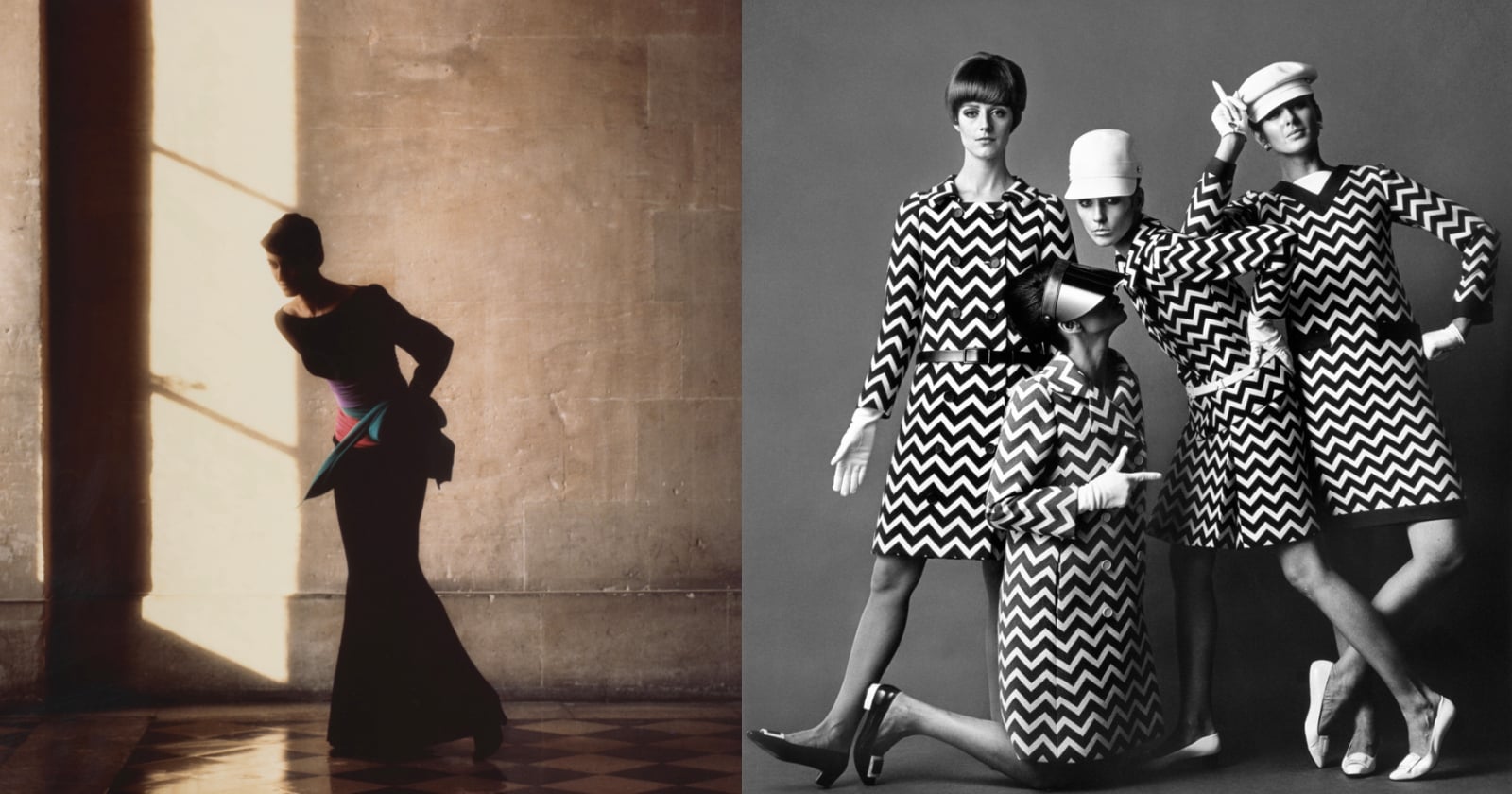
Long before social feeds turned every collection into a scroll of perfectly lit thumbnails, Yves Saint Laurent understood that a garment only truly exists once a camera has looked at it. A new exhibition at New York’s International Center of Photography (ICP), Yves Saint Laurent and Photography, makes that argument vividly, tracing four decades in which the lens was not just a marketing afterthought but a creative engine.
The show runs through September 28 and was organized in collaboration with the Musée Yves Saint Laurent Paris and the Fondation Pierre Bergé–Yves Saint Laurent. It assembles nearly 300 photographs and archival objects, a roster that reads like a hall of fame of fashion imagery: Richard Avedon, Cecil Beaton, Annie Leibovitz, Helmut Newton, Gian Paolo Barbieri, and Irving Penn all feature, alongside contact sheets, campaign materials, magazines, and personal snapshots.
That mix is the point. Saint Laurent treated photography as a tool for risk-taking, a way to push at the boundaries of what was considered acceptable — especially around gender roles. Helmut Newton’s Rue Aubriot pantsuit, shot for Vogue Paris in September 1975, is the clearest emblem of that ambition: tailoring rendered as something charged, confrontational and unmistakably modern.
The exhibition is split into two halves. The first gathers portraits and fashion images by photographers working in wildly different registers, charting both the evolution of the designs and the public image of the man behind them. Highlights include:
- Irving Penn’s 1957 portrait of Yves Saint Laurent, capturing him at the very start of his rise.
- Patrick Demarchelier’s 2004 portrait, a bookend from near the end of his career.
- William Klein’s experimental images from 1962, restless and graphic.
- Bettina Rheims’ backstage photographs from 1980s runway shows.
The second section turns to the archive itself, drawing on more than 200 items from the Musée Yves Saint Laurent Paris. Here the magic of the finished campaign gives way to the machinery behind it: contact sheets scribbled with edits, advertising notebooks, catalogs, press clippings and Polaroids shot by house staff at 5 Avenue Marceau. Those workaday Polaroids — an ensemble worn by Edia Vairelli from the Spring/Summer 1982 couture collection, a tailored suit on Anna Karin from Autumn/Winter 1991 — are oddly moving precisely because they were never meant for the public.
What emerges is a portrait of a designer who grasped, decades early, that fashion is consumed as image first and fabric second. The likes of James Moore, Dominique Issermann, Arthur Elgort and Jean-Claude Sauer didn’t just document the collections; they helped invent a visual language that still shapes how we read fashion today. For anyone who cares about how photography and style feed one another, the ICP show is essential viewing.