Data reduction ratios usually live in the boring single digits, so when a vendor starts throwing around numbers like 90:1, the natural instinct is to raise an eyebrow. Huawei is asking us to do exactly that with its new OceanProtect Backup Storage X8100 and X9100, unveiled in May 2026.
The headline claim is a compression ratio reaching as high as 90:1 under suitable workloads. That figure isn’t pulled out of thin air, but it does come with the usual asterisk: under ideal conditions. Backup data is famously repetitive — think endless duplicate database snapshots and near-identical virtual machine images — which is precisely the kind of payload where aggressive deduplication and compression earn their keep.
What makes Huawei’s approach interesting is the mix of brains and brute force. On the brains side sits a proprietary algorithm family the company calls HZU, described as combining a fast nonlinear transformation with lightweight context prediction. In plain terms, it tries to be smart about spotting patterns without choking on the processing overhead that usually makes heavy compression painfully slow.
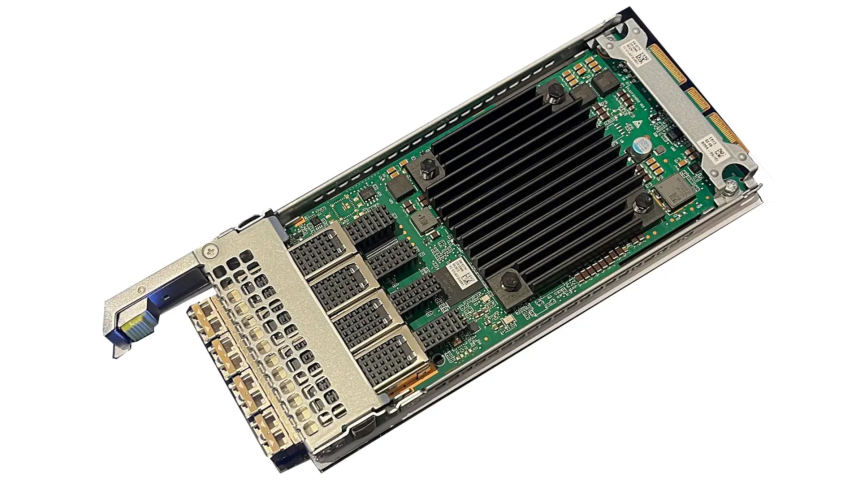
On the brute-force side, there’s a dedicated hardware compression card and a stack of SSDs doing the heavy lifting. Huawei pairs QLC storage media — the dense, cost-friendly flash favoured for capacity — with an adaptive SLC zone reserved for frequently accessed hot data. It’s a sensible compromise: QLC keeps the cost-per-terabyte down, while the SLC buffer absorbs the writes and reads that QLC alone would handle sluggishly.
The combination is meant to dodge the classic backup-storage trade-off, where you either get good compression or good speed but rarely both. According to Huawei, the new systems run up to 50 percent faster than the previous generation, which suggests the company is confident the HZU algorithm isn’t bottlenecking throughput in pursuit of those eye-catching ratios.
A few caveats are worth keeping in mind:
- The 90:1 figure is a best case, not a guarantee — real-world ratios depend entirely on how compressible and redundant your data already is.
- QLC flash trades endurance and raw speed for density, which is why the SLC hot-data tier matters so much here.
- This is purpose-built backup storage, not a general-purpose array, so the numbers are tuned for that scenario.
For organisations drowning in backup volumes, the appeal is straightforward: cram far more protected data onto far fewer drives, without the painful performance penalty that heavy reduction normally drags along. Whether the 90:1 ceiling translates into anything close to that in your data centre is the question only your own workload can answer — but even a fraction of that ratio would meaningfully shrink the storage bill.