Nintendo’s hybrid is having the kind of first year that rivals can only dream about. Twelve months after its June 5, 2026 launch, the Switch 2 has moved 5.9 million units in the United States — enough to make it the second fastest-selling console in US history.
The only machine still ahead of it? Nintendo’s own Game Boy Advance, which sold 6.5 million units in its first 12 months a quarter of a century ago. Being beaten only by your own legacy is the most Nintendo problem imaginable.
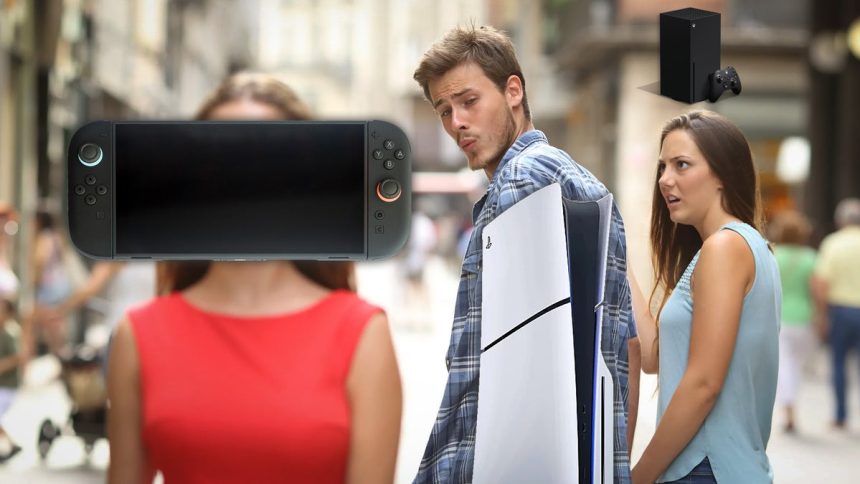
While the Switch 2 climbs, the competition is sliding. PlayStation just logged its weakest May hardware sales in the past 25 years, and Xbox endured its worst May on record. Whatever Sony and Microsoft are doing, the market is voting elsewhere.
It helps that the Switch 2 is a genuine generational leap rather than a polite refresh. Under the hood sits an ARM Cortex A78C eight-core CPU paired with a custom NVIDIA Ampere GPU rated at up to 3.072 TFLOPs — a figure that puts real horsepower behind Nintendo’s famously efficient software. There’s 12GB of LPDDR5X memory and 256GB of UFS storage, a meaningful jump from the original’s modest internals.
The display is where you feel the upgrade in your hands. The 7.9-inch 1080p LCD supports HDR10 and a 120Hz refresh rate, giving handheld play the kind of smoothness that used to be the exclusive territory of pricey gaming phones and PC handhelds.
None of this comes cheap by Nintendo standards. The Switch 2 carries a price of US$449.99 (€469.99 in Europe), a notable step up from where the brand has historically positioned its hardware. Yet the sales figures suggest buyers are perfectly comfortable paying it.
What makes these numbers especially striking is the context. Console hardware is a brutal, slow-margin business, and a sophomore Nintendo system arriving into a mature market was hardly guaranteed to ignite. Instead it has done the opposite, posting a launch year that sits just shy of the company’s all-time benchmark.
The takeaway for the wider industry is uncomfortable but clear. As PlayStation and Xbox post historic lows, Nintendo has proven once again that the right blend of accessible hardware, a strong screen and a deep library beats a spec-sheet arms race. The Switch 2 didn’t quite catch the Game Boy Advance — but it got close enough to remind everyone who still owns the record books.