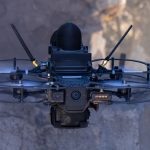
Robotic welding has been around for decades, but it’s mostly meant caged industrial arms bolted to a factory floor, welding the same seam over and over. Path Robotics is chasing something far more ambitious: a machine that thinks about the weld while it makes it. The company’s approach revolves around Obsidian™, which it describes as the first purpose-built foundational AI model for welding.
The idea is deceptively simple. Instead of programming a robot to follow a fixed path, you let it perceive the joint, adapt to it, and correct on the fly. Obsidian is a reinforcement learning agent trained on real-world data — tens of millions of welded inches, according to the company. It ingests real-time sensor data and makes welding decisions seam by seam, which is exactly how a skilled human welder works, minus the fatigue.
CEO Andy Lonsberry has laid out the reasoning behind this: manual programming simply doesn’t scale for the high-mix, low-volume work that dominates much of modern manufacturing. UC San Diego professor Michael Yip, meanwhile, frames the broader challenge of robot learning — teaching machines to generalize from experience rather than memorize instructions. That distinction is the whole ballgame here.
The performance claim is the headline number: intelligent welding cells running Obsidian are said to be up to 17x faster than manual welding. That’s the kind of figure that gets a shop floor manager’s attention, though real-world results always depend on part complexity and setup.
The most eye-catching product is Rove™, a mobile robotic welding system that pairs the Obsidian physical AI model with a quadruped platform. Yes — a welding robot that walks. Rather than bringing the part to the robot, Rove can walk to the work. Its capabilities include:
- Real-time vision guidance to maintain an optimal welding path
- Data capture during every weld
- Heat distortion compensation
- Real-time parameter adjustment via the Obsidian AI
Rove was unveiled as part of Path Robotics’ public launch at the Sea-Air-Space 2026 expo in National Harbor, Maryland, held April 19–22, 2026. That defense-industry venue is a telling choice — shipyards, heavy fabrication and one-off structural work are precisely the environments where fixed automation falls flat and a walking, seeing welder could earn its keep.
For now, Rove sits in an early adopter evaluation phase, so it’s not something you’ll spot on a typical production line just yet. Path Robotics hasn’t disclosed pricing, which is unsurprising for a system this specialized and this early in its rollout.
What’s genuinely interesting isn’t the quadruped gimmick — it’s the bet that welding, one of manufacturing’s most stubbornly manual crafts, can be captured in a foundational AI model. If Obsidian’s real-world data flywheel keeps spinning, the 17x figure may be just the opening act.