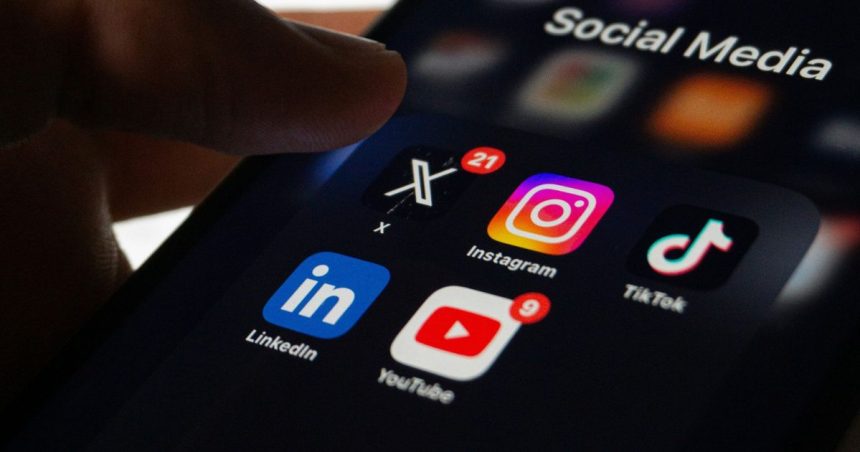
What began as a bold policy experiment in Australia has snowballed into a worldwide reckoning. More than 20 countries are now enforcing, proposing, or fiercely debating age-based restrictions on social media for children, according to an AFP tally. At least five already have nationwide rules in force, and the rest — including a cluster of European nations — are lining up behind them.
The driving force is a mounting pile of concerns: teenage mental health, online safety, wrecked sleep patterns, and exposure to harmful content. Lawmakers are also zeroing in on the mechanics that make platforms so sticky — addictive recommendation algorithms, cyberbullying, and a rising tide of AI-generated content that makes the online world even trickier for young users to read.
Drawing a digital line
Australia set the tone, becoming one of the first major democracies to pass one of the world’s toughest social media laws — banning access for anyone under 16 in December 2025. The dominoes have been falling since.
- In Brazil, platforms must now verify users’ ages and tie accounts of under-16s to a parent’s account.
- Indonesia and Malaysia have rolled out nationwide restrictions for under-16s.
- China has been tightening the screws since 2019, extending screen-time limits from online gaming to social media and streaming platforms in 2023.
- Turkey approved legislation banning social media for under-15s starting in late 2026.
- The United Arab Emirates plans a similar restriction over the coming year.
As AFP frames it, these countries mark the first wave of governments shifting from gentle parental guidance to hard legal enforcement.
Europe becomes the battleground
The continent is now the main event. An expert committee is expected to hand recommendations to the European Commission regarding possible EU-wide action — a move that could ripple across all 27 member states. But several countries aren’t waiting for Brussels.
- Greece plans to ban under-15s from January 2027.
- Austria and Slovenia are drafting comparable legislation.
- Germany is weighing age-based limits after Chancellor Friedrich Merz backed stronger controls.
- Sweden has proposed a ban for under-15s by early 2028.
Meanwhile, Ireland, Denmark, Norway, the United Kingdom, and Canada are all exploring laws that would push the minimum age to around 16, while France, Spain, Portugal, and Italy debate their own restrictions. Beyond Europe, several Indian states are examining age limits as the central government reportedly talks with platforms about safeguards.
The shift reflects a broader change in mood. For years, the platforms insisted parental controls and self-regulation were enough. Lawmakers increasingly disagree, citing research linking heavy social media use to anxiety, depression, disrupted sleep, and shrinking attention spans in teens.
Whether every proposal survives contact with reality is another matter. Age verification, privacy, enforcement, and free expression remain thorny, divisive issues. But one thing is clear: the era of unrestricted social media for children is under scrutiny like never before, and the next few years could fundamentally reshape how young people experience the internet.