Building a utility-scale solar farm is a brutally repetitive job: haul heavy panels across dusty fields, lift them into place, bolt them down, and repeat several thousand times under a merciless sun. It’s exactly the kind of work robots were born to take over — and that’s the pitch behind Maximo, an AI-enabled field robot incubated by AES Corporation.
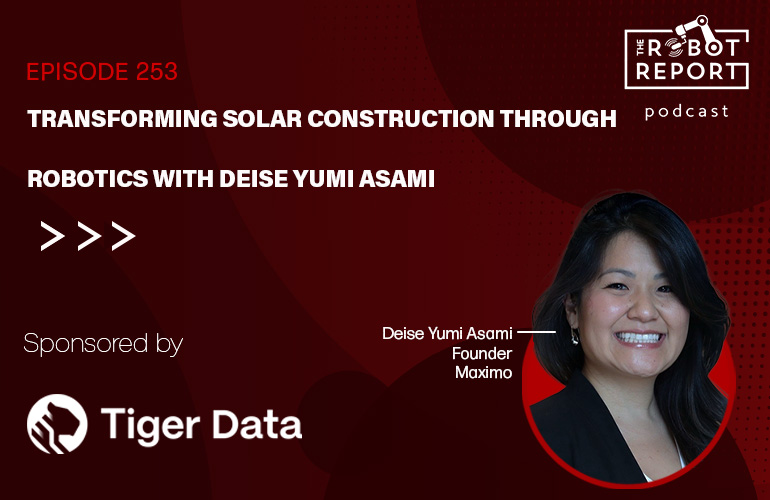
Maximo founder Deise Yumi Asami has been laying out how robotics is compressing the timeline for solar construction, and the argument is compelling. Instead of framing the machine as a novelty, the company positions it as a practical answer to a very real bottleneck: the human labor and time required to physically assemble the enormous arrays that make up modern solar plants.
The platform pairs computer vision and AI-driven positioning with the muscle needed to move and place heavy photovoltaic modules. That combination lets Maximo handle the panels far faster and more consistently than a crew doing it by hand, while sparing workers the most punishing parts of the job. In an industry where a single project can span hundreds of acres, shaving time off the installation phase has an outsized effect on the overall build.
The numbers are starting to back up the concept. AES introduced Maximo on August 1, 2024, and by March 25, 2026 the company reported that the robot had successfully installed 100 megawatts of utility-scale solar capacity. That’s not a lab demo — it’s a meaningful chunk of real generating capacity put in the ground by machine.
A few things worth keeping in perspective. Maximo isn’t a gadget you can order online, and there’s no consumer price tag attached — it’s industrial equipment aimed squarely at the developers and contractors building grid-scale solar. Think of it less as a product and more as a piece of construction infrastructure, one that happens to run on AI instead of overtime.
What makes Asami’s take interesting is the framing: robotics here isn’t about replacing solar altogether or chasing headlines, it’s about making the clean-energy buildout faster and cheaper to physically execute. As demand for renewable capacity keeps climbing, the limiting factor increasingly isn’t the panels themselves but the speed at which they can be assembled and connected. A robot that can hit 100 MW of installations is a direct attack on that constraint.
If Maximo scales the way AES hopes, the story of solar construction over the next few years may be less about breakthroughs in cell efficiency and more about who can build the fields fastest — with robots quietly doing the heavy lifting.