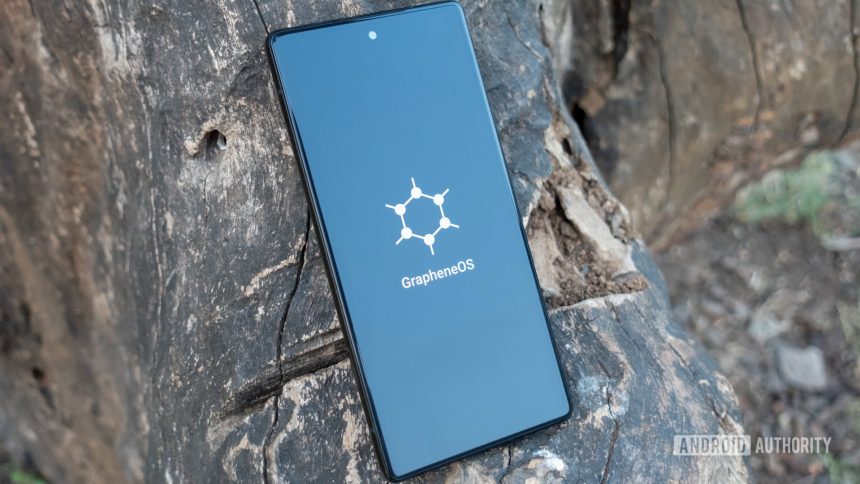
For years, the privacy-hardened GrapheneOS existed almost exclusively in Google Pixel territory. That’s about to change — and, somewhat ironically, the breakthrough isn’t coming from either the OS team or the handset maker. It’s coming from Qualcomm.
GrapheneOS has now explained what’s finally making its long-planned Motorola support technically feasible: recent advances in Qualcomm’s platform. The security-focused Android fork is famously demanding about hardware. It insists on properly implemented verified boot, timely firmware, and a locked-down chain of trust — the sort of low-level plumbing that most manufacturers treat as an afterthought. Historically, only Pixels ticked all the boxes, which is why the project stayed a one-brand affair for so long.
The Motorola tie-up itself was made public back at Mobile World Congress on March 2, 2026, framed as a long-term partnership rather than a single-device stunt. The plan is twofold: a future Motorola smartphone shipping with GrapheneOS pre-installed, and a selection of GrapheneOS-derived features filtering out to other Motorola handsets.
Here’s the crucial caveat, and it’s one worth stating plainly. As of today, there is no Motorola device compatible with GrapheneOS. The 2026 models simply don’t meet the project’s requirements, so support isn’t coming to them. Instead, the effort is aimed squarely at the next generation: 2027 devices are being engineered to clear the bar, with GrapheneOS support implemented specifically for them. The first phone is expected in 2027.
That timeline tells you a lot about what’s involved. Bolting a secure OS onto existing silicon isn’t enough — the hardware and firmware have to be built with those guarantees in mind from the start. This is where Qualcomm’s progress matters. By hardening its platform in ways GrapheneOS needs, the chipmaker effectively hands Motorola the foundation to build a device that satisfies the project’s strict standards.
For the wider Android ecosystem, the significance is hard to overstate. GrapheneOS has long argued that its dependence on Pixels was a hardware limitation, not a philosophical preference. If a mainstream vendor like Motorola can meet the same threshold, it cracks open the door to a genuine alternative source of hardware for privacy-conscious users — people who want granular permission controls, hardened memory allocation and a de-Googled experience without buying into a single brand.
What we don’t yet know is arguably the interesting part. Motorola hasn’t named the model, hasn’t disclosed specifications, and hasn’t put a price on any of it. Those details remain firmly under wraps while the 2027 hardware takes shape.
For now, the takeaway is refreshingly clear: the bottleneck was never really about willingness. It was about silicon that could uphold GrapheneOS’s promises — and Qualcomm has apparently delivered it.