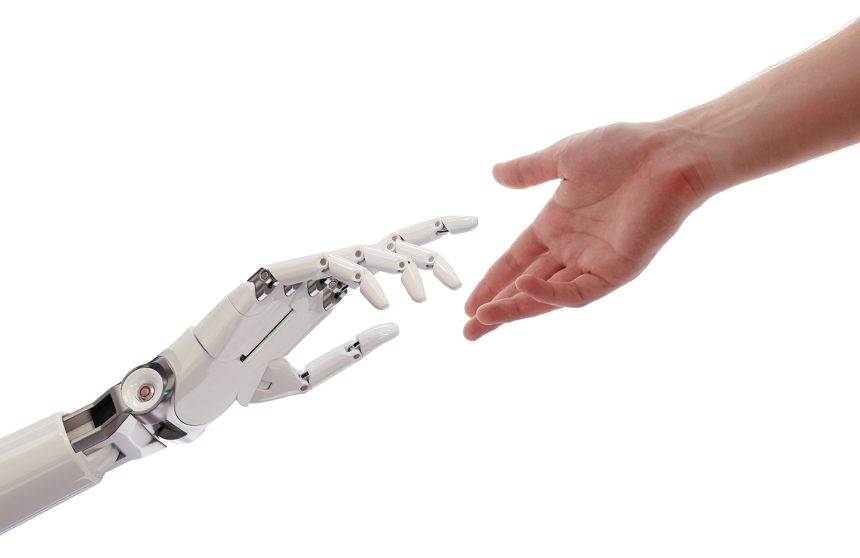
Robotic hands usually chase human dexterity with a tangle of motors, tendons and sensors packed into every knuckle. A team of researchers in China took the opposite route with the BioflexBot, a soft robotic hand that recreates the core motions of our own fingers using little more than air and clever mechanics.
The design, described in a paper published in Advanced Science on August 13, 2026, strips the problem down to three key ingredients: a coiled spring, a constraining shell and compressed air. That combination lets the hand pinch, rotate, hook and grasp — the four fundamental gestures that cover most of what human fingers do all day — while relying on just two pneumatic inputs. In a field where control complexity tends to balloon with every added degree of freedom, that is a strikingly lean setup.
What really sets the BioflexBot apart is range. According to the researchers, the mechanism extends and contracts 3.5 times more than a human hand, meaning it does not just imitate our motions but pushes past them. The coiled spring provides the elastic backbone, the shell channels how that spring can deform, and the compressed air drives the whole thing between its stretched and contracted states.
The appeal of a pneumatic, spring-based approach is more than academic elegance. Fewer inputs and fewer rigid components generally translate into a hand that is cheaper to build, lighter, more compliant when it touches delicate objects, and less likely to break when something goes wrong. Soft robotics has been eyeing exactly these traits for applications ranging from prosthetics and rehabilitation to warehouse picking and human-robot collaboration, where a gripper that can safely handle irregular items matters as much as raw precision.
A few caveats are worth keeping in mind. The BioflexBot is a research prototype, unveiled through an academic publication rather than a product launch. There is no price, no release timeline and no consumer availability — this is a proof of concept meant to demonstrate that a small number of well-chosen mechanical elements can substitute for a lot of motorized complexity.
Still, the direction is compelling. If a hand built around a spring, a shell and two air lines can already match human grasping while stretching further than our own fingers, it hints at a future where capable manipulators no longer demand elaborate hardware. For anyone tracking where soft robotics is heading, the BioflexBot is a neat reminder that sometimes the smartest move is to do more with less.