Nine years after they first hit shelves, the Galaxy S8, S8+ and Note 8 are still getting software attention — and that alone is worth raising an eyebrow. Samsung has begun pushing a fresh firmware update to these veteran devices, and after an initial U.S.-only rollout, it is now reaching owners across more countries globally.
The 2017 flagships were long ago retired from Samsung’s official support schedule, which makes any new firmware a genuine oddity. Yet here it is: version G950FXXUCDZE7 for the Galaxy S8, and N950FXXUGDZEA for the Galaxy Note 8.
So what does it actually do? That’s where things stay frustratingly vague. Samsung’s changelog says the update improves device behavior — corporate speak that reveals almost nothing. There are no headline features, no fresh UI tweaks, and no dramatic performance claims attached to the release notes.
Crucially, this is not a security update. The security patch level stays exactly where it was:
- Galaxy S8: April 2021
- Galaxy Note 8: August 2021
That detail is telling. When a manufacturer ships firmware without bumping the security patch date, it usually points to a targeted fix — perhaps addressing a specific bug, a network compatibility issue, or a stability quirk that surfaced on aging hardware. Whatever the cause, it’s clearly deliberate rather than accidental, given that Samsung has now widened the rollout beyond its original U.S. testing ground.
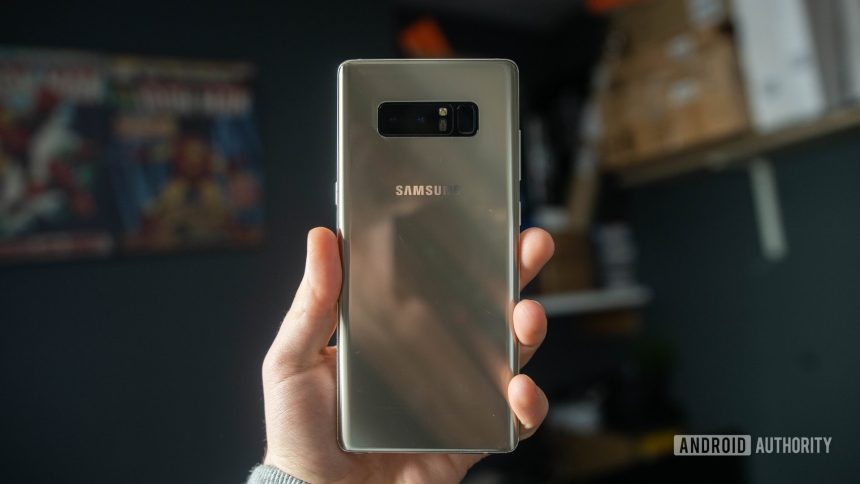
For context, the Galaxy S8, S8+ and Note 8 launched back in 2017, the year Samsung introduced its now-iconic Infinity Display and, in the Note 8’s case, a dual-camera setup and the S Pen. These phones defined a generation, but they’ve been well outside the standard update window for years. Owners who still keep one running as a daily driver, a backup handset or a media device may find the notification a pleasant, if mysterious, surprise.
If you’re holding onto one of these classics, the update should arrive over the air — head to Settings > Software update and check manually if you’re impatient. Given the staggered global rollout, availability can vary by region and carrier, so don’t panic if it hasn’t appeared yet.
It’s rare to see a company quietly service hardware this old, and without a detailed changelog we’re left to speculate about the reasoning. Still, for a phone lineup approaching a decade in age, any sign of life from the mothership counts as a small win for longevity — and a reminder that some Galaxy classics simply refuse to be forgotten.