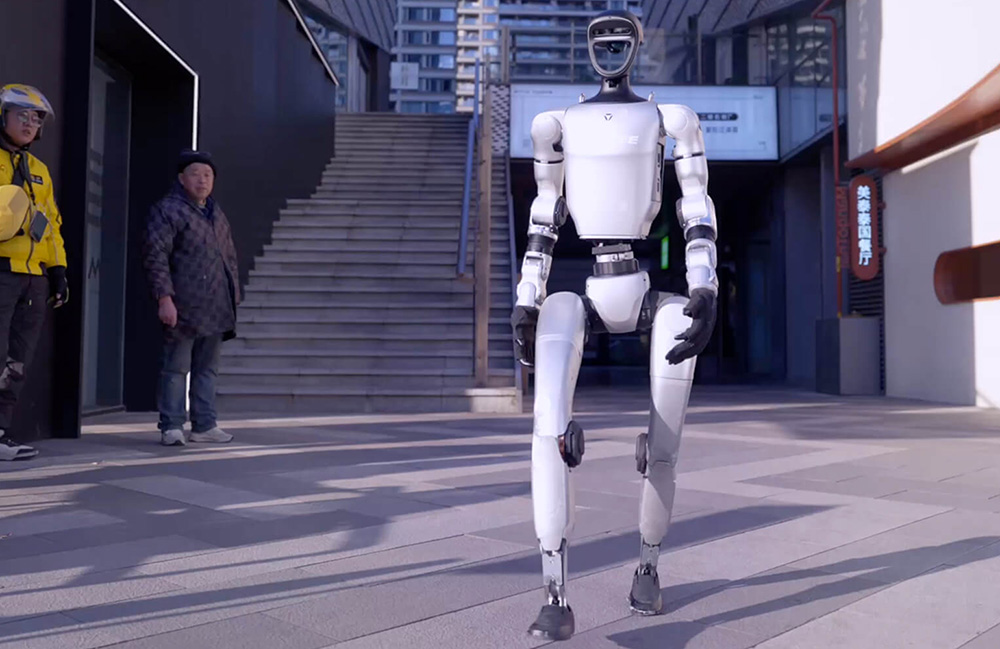
Few trading debuts in Chinese tech have been as loud as Unitree Robotics’. Few have unwound as fast. The Hangzhou maker of humanoid and quadruped robots closed at 513.93 yuan ($72.10) on September 9, 2026 — about 39% below the 845-yuan price it settled at on its first day of trading, and 53% below the 1,100-yuan high it touched during that same session.
The listing itself could hardly have gone better. Unitree priced its offering on the Shanghai Stock Exchange at 150.80 yuan per share, raising roughly 6.1 billion yuan ($900 million) at a valuation of about 61 billion yuan ($9 billion). When ticker 688836 started trading on August 19, 2026, the stock finished the day 460% above its IPO price, and at its intraday peak it carried a valuation of roughly 445 billion yuan — about $66 billion.
What the market has been repricing since is the distance between that headline number and the company’s actual income statement.
- 2025 revenue: 1.70 billion yuan ($252 million), up from 392.77 million yuan in 2024
- Humanoids: 868 million yuan, or 51.78% of total revenue, on shipments of more than 5,500 humanoid robots during the year
- First-half 2026 guidance: between 1.052 billion and 1.128 billion yuan, or roughly 36% to 45% year-over-year growth
At the September 9 close, Unitree was worth roughly $30 billion. That works out to about 125 times its 2025 revenue and more than 350 times its adjusted 2025 earnings. At the $66 billion peak, the stock was priced at more than 250 times 2025 revenue — multiples normally reserved for software companies with near-zero marginal costs, not for a firm that machines actuators, assembles limbs and ships physical hardware in the low thousands of units.
That is the uncomfortable arithmetic behind the selloff, and it is worth being precise about what it does and does not say. Unitree is still growing revenue at a rate most hardware companies would envy, it has more than quadrupled its top line in a year, and humanoids have already crossed the halfway mark as a share of sales — a meaningful milestone for a business that the public first knew for robot dogs. The shares also remain more than three times the IPO price. The decline is a correction in expectations, not a verdict on the products.
Regulators appear to share the caution. Chinese authorities have told some investment banks and companies that prospective listings should demonstrate recurring revenue, progress toward reducing losses or significant technological innovation — a pointed set of criteria for a sector where demo videos have travelled further than purchase orders.
For the rest of the humanoid industry, Unitree is now the reference price. Its debut proved that public markets will fund the category with enthusiasm. Its first three weeks of trading proved they will also mark it back down.