Robots are great at seeing what’s right in front of them — and notoriously bad at everything else. A pallet sliding into a blind spot, a worker stepping around a corner, a forklift approaching from the side: onboard sensors simply can’t catch it all. That’s the gap FORT Robotics and NVIDIA set out to close.
On June 22, 2026, FORT Robotics joined the NVIDIA Halos for Robotics ecosystem and showed off an agentic safety application built on the NVIDIA Halos Outside-In Safety Blueprint. The demonstration ran at the Automate conference in Chicago, followed by a joint FORT–NVIDIA presentation on June 23.
The core idea is refreshingly literal. Instead of relying solely on the cameras and lidar bolted to a robot, Outside-In Safety taps into sensors mounted around the facility itself — on walls, ceilings, gantries — and pipes that data through visual AI agents that watch the whole scene. The robot effectively borrows the eyes of its environment, gaining awareness well beyond the reach of its own hardware.
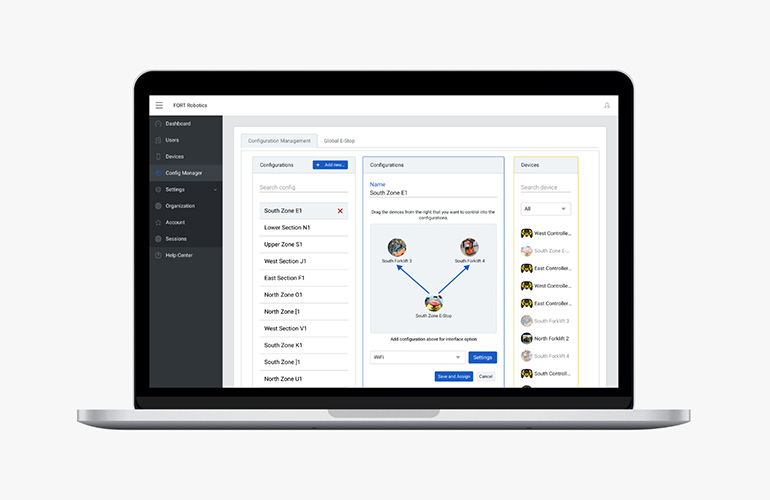
FORT contributes its Trust Layer, which fuses with the blueprint to extend robot perception across the external infrastructure. The heavy lifting on compute and connectivity falls to two NVIDIA platforms:
- NVIDIA IGX Thor — the AI compute backbone for real-time inference at the edge
- NVIDIA Holoscan Sensor Bridge — handling sensor connectivity and the firehose of incoming visual data
Together they turn a collection of fixed cameras into a coordinated safety net, capable of flagging hazards a robot would otherwise never register.
The payoff is meant to cut both ways. Better outside-in awareness should keep workers safer on busy factory floors, where humans and autonomous machines increasingly share the same aisles. But it’s also pitched as a productivity play: robots that trust their surroundings don’t have to crawl or slam to a halt every time something moves at the edge of their vision. Fewer false stops, smoother operation, more work done.
This is firmly enterprise territory — a safety framework for industrial robotics rather than something you’ll plug in at home. Still, it hints at where automation is heading. As warehouses and plants fill with mobile robots, the smart move isn’t just giving each machine better eyes; it’s wiring the building itself into the safety equation.
For developers eager to tinker, the open-source NVIDIA Halos Outside-In Safety Blueprint is available in early access on GitHub, letting teams start experimenting with infrastructure-driven perception today. Pricing for FORT’s commercial Trust Layer integration hasn’t been disclosed, but the building blocks are already out in the open.