When NASA packed a Nikon Z9 aboard Artemis II, the obvious assumption was that it would shoot postcard-perfect lunar snapshots for the mission’s press kit. It turns out the mirrorless flagship did something far more useful: it helped rewrite a piece of solar physics.
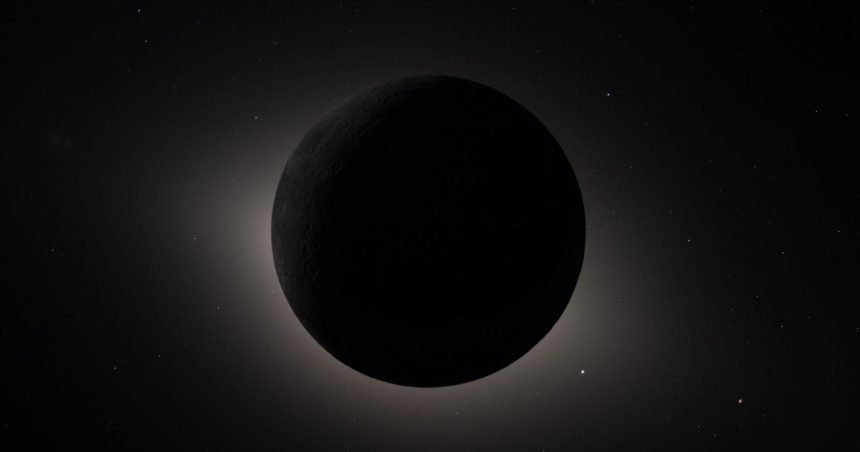
Researchers at Tokyo City University have published a new paper in The Astrophysical Journal Letters built entirely on images the Artemis II astronauts captured during their lunar flyby. The crew’s target wasn’t the crater-pocked surface below — it was the Sun’s faint outer atmosphere, the corona. By analyzing those frames, the team extracted fresh insights into the corona’s structure, the kind of detail that’s notoriously hard to pin down from Earth’s surface.
The reason this worked comes down to what’s inside the Z9. Announced on October 28, 2021, the camera is built around a 45.7 MP stacked CMOS sensor — the stacked design giving it the read-out speed and clean high-resolution capture that scientific imaging craves. It can rattle off bursts of over 1,000 shots and record 8K video at 60 fps in 12-bit N-RAW, so there’s plenty of raw data to mine long after the shutter stops clicking.
What makes the story genuinely satisfying is the demonstration of principle. A camera doesn’t have to be a purpose-built astronomical instrument to produce publishable astrophysics. Give a capable commercial body to trained astronauts, point it at the right phenomenon at the right moment, and you get results that a dedicated science payload might otherwise have been needed to gather. That’s a compelling argument for putting more off-the-shelf hardware into orbit and beyond.
The Artemis II mission itself ran from April 1–11, 2026, sending its crew on a flyby of the Moon. The Z9 was carried along in part as a hardware test, to see how the camera would behave in the harsh thermal and radiation environment of deep space. The bonus is that the test frames turned into peer-reviewed data.
For anyone tempted to shoot their own celestial subjects, the Z9 is currently available for US$4,996.95, marked down from US$5,896.95. That’s a serious sum, but it buys the same core imaging pipeline that just contributed to a study on how our nearest star manages its outermost layers.
It’s a neat reminder that the line between consumer gear and scientific instrument is thinner than it looks. The next time a spacecraft loads up a camera for the trip, the mission planners might list “solar corona research” alongside “crew photography” — and mean it.