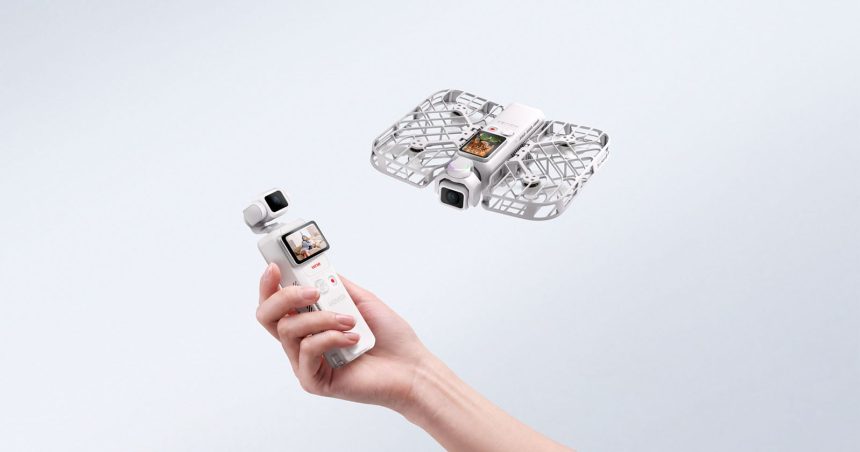
HoverAir has built its name on cameras that don’t need a hand to hold them — self-flying drones that trail you down a trail, and more recently a floating shooter designed for the water. Its latest reveal doubles down on that shape-shifting philosophy. Unveiled on July 29, 2026, the HoverAir Versa is billed as the world’s first flying pocket camera, a device that lives in your palm one moment and lifts off the next.
The pitch is refreshingly simple. Most of the time the Versa behaves like a compact 3-axis gimbal camera, complete with a built-in screen and on-body controls, so you can frame shots, tweak settings and shoot without pairing a phone. When a scene calls for something more ambitious, the same unit transforms into an AI flying camera — a genuine 2-in-1 that swaps a handheld grip for an aerial vantage point on the fly.
That dual identity is the whole point. Instead of choosing between a stabilised handheld rig and a drone, the Versa asks you to carry one thing that plays both roles. It’s a neat answer to a problem most creators know well: the best moments rarely wait for you to swap gear.
On the imaging side, HoverAir is keeping its cards close for now. The company claims an industry-leading image processor that promises excellent dynamic range and strong low-light performance — the kind of language that hints at ambitions well beyond a novelty toy. Full camera specifications haven’t been published yet, so there’s no sensor size, resolution or frame-rate to pin down at this stage.
What we do know paints a clear picture of intent:
- 2-in-1 design: pocket gimbal camera that converts into an AI flying camera
- Stabilisation: 3-axis gimbal for smooth handheld footage
- Onboard control: built-in screen and physical controls, no phone required
- Processing: an image processor tuned for dynamic range and low-light shooting
The self-flying autonomy that made HoverAir’s earlier drones so approachable — point, launch, let it track you — is the obvious foundation here, and it’s what separates the Versa from a conventional drone you have to pilot. The company’s whole story has been about removing the friction of getting the shot, and a transforming pocket camera is a logical next chapter.
Pricing hasn’t been announced, and the Versa isn’t on sale yet. HoverAir says further details and an official launch date will follow, so the finer points — sensor, flight time, image resolution and cost — remain to be filled in. For now, the concept alone is enough to raise an eyebrow: a camera small enough to pocket that can leave your hand entirely when the shot demands it. If HoverAir delivers on the imaging claims, the Versa could reshape what people expect from an all-in-one creator tool.