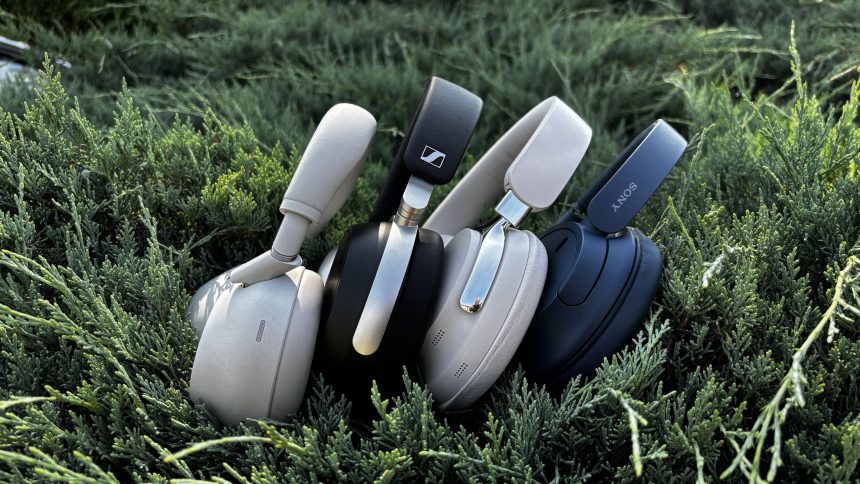
Ask five audio engineers where wireless headphones are heading, and you might expect five different answers. Instead, a fascinating consensus emerges — and it’s not just about squeezing louder bass into smaller earcups.
The prevailing theme is personalisation powered by AI. Rather than tuning a headphone to some mythical “average” listener, the industry vision is software that adapts to your ears, your hearing profile and even your listening habits. Think of it as a bespoke frequency response, generated on the fly, that no two people would hear quite the same way.
The experts weighing in came from a genuine who’s-who of the audio world: Sony, Technics, Bowers & Wilkins, Harman Luxury and Sennheiser. When names of that calibre broadly agree on a direction of travel, it’s usually worth paying attention.
Beyond personalisation, three other threads run through their predictions:
- Higher data rates. Wireless has long been the compromise audiophiles grudgingly accepted for the sake of convenience. The push now is toward moving more data over Bluetooth, narrowing — and eventually closing — the gap with wired listening.
- Smarter, adaptive sound. Personal audio profiles that respond to your environment and hearing, rather than a one-size-fits-all EQ curve baked in at the factory.
- Better repairability. Perhaps the most consumer-friendly prediction of the lot. Headphones that can be opened, serviced and fixed rather than binned when a battery fades or a hinge cracks — a nod to sustainability and to buyers tired of disposable electronics.
That last point is telling. For years, sealed-in batteries and glued-together builds have made premium headphones frustratingly throwaway. A shift toward repairable designs would mark a real change in how these products are engineered — and how long they last in your bag.
The higher-data-rates ambition is equally significant. As codecs and Bluetooth standards evolve, the promise is wireless audio that no longer forces a trade-off between freedom from cables and outright fidelity. For anyone who has agonised over whether to go wireless, that’s a quietly exciting prospect.
What ties it all together is a move away from the specs-arms-race mentality — more drivers, more decibels, more noise cancellation — toward something more human. The headphones of the future, if these five insiders are right, will know who’s wearing them, keep working for longer, and finally sound as good untethered as they do plugged in.
None of this is a single product launch, and none of it comes with a price tag attached yet. But as a snapshot of where the biggest names in audio think the category is going, it’s a rare moment of industry-wide alignment — and a reassuring one for listeners.