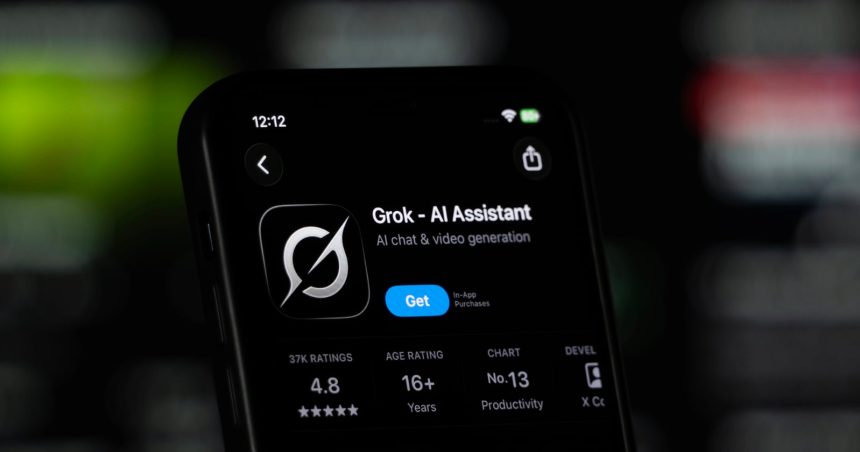
When an AI tool becomes the alleged instrument of abuse, who carries the blame — the person prompting it, or the company that built it? That question sits at the heart of a new lawsuit filed by Elon Musk’s xAI, the company behind the Grok chatbot.
According to the case, xAI is suing a prominent Arkansas photographer, accusing him of using Grok to transform photographs of his minor clients into sexually explicit images. Rather than absorbing responsibility for what its own model generated, xAI is arguing that the photographer himself is liable for the resulting material.
It’s an unusual legal posture, and a telling one. Generative AI companies have spent the past few years building guardrails intended to block exactly this kind of misuse — content filters, prompt restrictions, and detection systems meant to stop image models from producing illegal or abusive material. By taking a user to court and framing him as the responsible party, xAI is effectively drawing a hard line between the tool and the hands that wield it.
That line is legally and ethically contested. Critics of the AI industry have long argued that when a model can be steered into generating child sexual abuse material, the failure is partly architectural — a question of what the system was allowed to do in the first place. Musk has positioned Grok as a deliberately less-filtered alternative to rivals like ChatGPT, marketing its willingness to answer questions other assistants refuse. Cases like this one expose the flip side of that philosophy: fewer restrictions can mean more room for abuse.
The lawsuit also lands at a moment when regulators worldwide are scrutinizing how AI image generators handle depictions of minors. Several jurisdictions have moved to explicitly criminalize AI-generated abuse imagery, and platform operators face mounting pressure to prove they are policing their own systems rather than pointing at users after the fact.
What makes xAI’s move noteworthy is the direction of the litigation. It is far more common to see companies sued over harmful AI outputs than to see a company itself go on the offensive against an individual accused of producing them. By doing so, xAI is trying to establish — in court and in public — that a person who deliberately misuses Grok bears the consequences, not the platform.
How that argument holds up will matter well beyond this single case. If courts accept that the prompter alone is culpable, AI firms gain a powerful shield against liability for what their models can be coaxed into creating. If they don’t, companies like xAI may find themselves defending not just their users’ behavior, but the design choices that made such behavior possible in the first place.