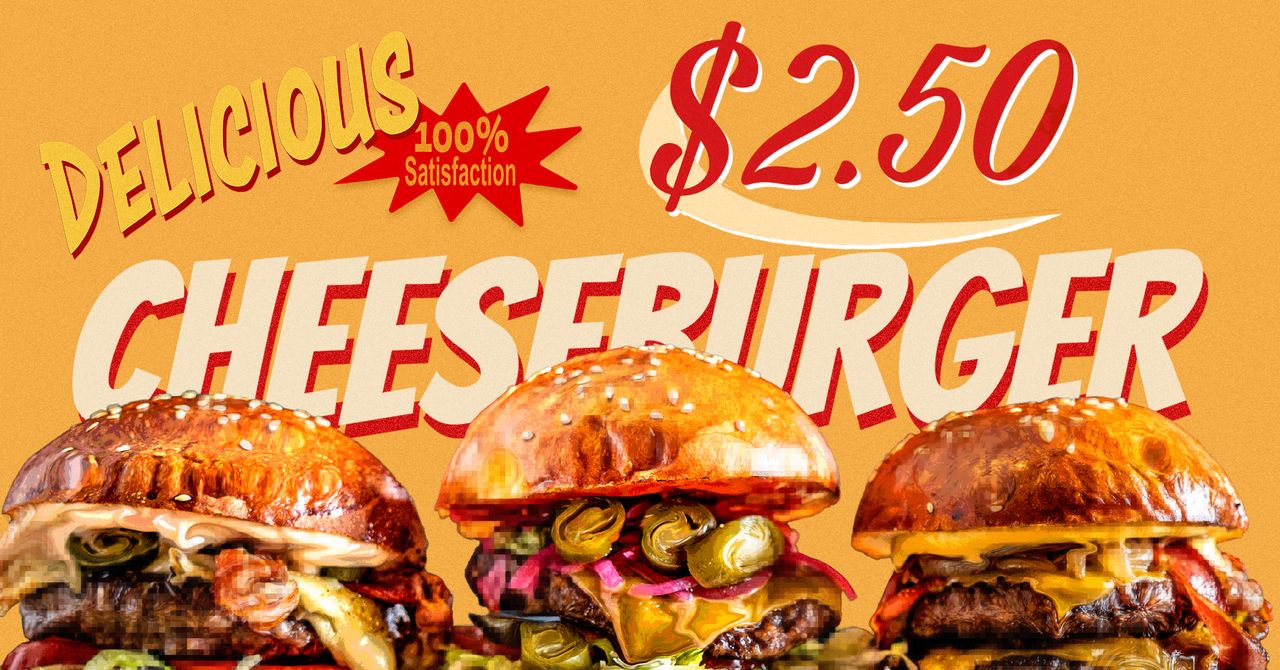
A burrito that looks infested with maggots. Pasta with a plasticky sheen. Dishes riddled with random holes, served with cuts of meat that exist in no known animal. AI-generated menu images have gone viral for being repulsive, and as WIRED’s Reece Rogers reported on September 3, 2026, they are everywhere — taco trucks, coffee shop posters, deli signs — an evolution of what has been dubbed the ChatGPT flyer pandemic.
The trail leads back to delivery apps. As diners shifted to picking meals from their phones, restaurant owners digitized their menus and scrambled to add visuals, chasing a visibility boost on third-party platforms like DoorDash without paying for a photoshoot. The most capable image models can render photorealistic food, but much of the menu slop appears to come from free chatbots on default settings. “I went to order pizza one night on Uber Eats. There were five different pizza places that were using the same AI-generated image,” Popmenu CEO and cofounder Brendan Sweeney told WIRED. His verdict: a photo that reads as completely inauthentic and obviously AI is a worse choice than no photography at all.
The ugly pictures are only the visible layer. Generative AI is increasingly deciding what goes on the menu in the first place. Tastewise, one of the largest data insights companies in the food and beverage industry, partners with Nestlé, PepsiCo and Kraft Heinz, and has gone all-in on “agentic” automations for every step of food creation. Its library includes:
- an agent that tracks how product launches are performing;
- an agent that tests new concepts — banana creatine smoothies, anyone?
- an agent that hunts for opportunity gaps in existing menus.
“We have billions of data points understanding what consumers are doing with food, what’s actually happening on menus and in the retail landscape,” says Michael Bortinger, Tastewise’s director of marketing and partnerships. The consumer-facing result is TasteGPT, a chatbot powered by food-specific insights. Companies pay for access, though the site offers a few free queries. Asked about trending flavors in plant-based snacks, the bot flagged dates as a “standout rising star” and cake-flavored plant-based snacks as a rising, if cooler, trend. Bortinger lists cold foam, hot honey and strawberry matcha as high on the consumer interest list, while ube “may be starting to be past its peak.”
None of this is entirely new — food stylists spent decades swapping ice cream for mashed potatoes and painting grill marks onto burger patties. And the tools are not going away: around 85 percent of restaurateurs feel comfortable using AI and plan to use it even more extensively, according to a Toast poll cited by WIRED. Sweeney’s pitch is a middle path — instead of fully synthetic images, restaurants should use software to patch up real smartphone photos of real dishes, with consistent lighting and uniform plating. Meanwhile, the backlash has developed its own aesthetic: popular local restaurants are going viral for handwritten notes promising that no generative AI touched their menus.