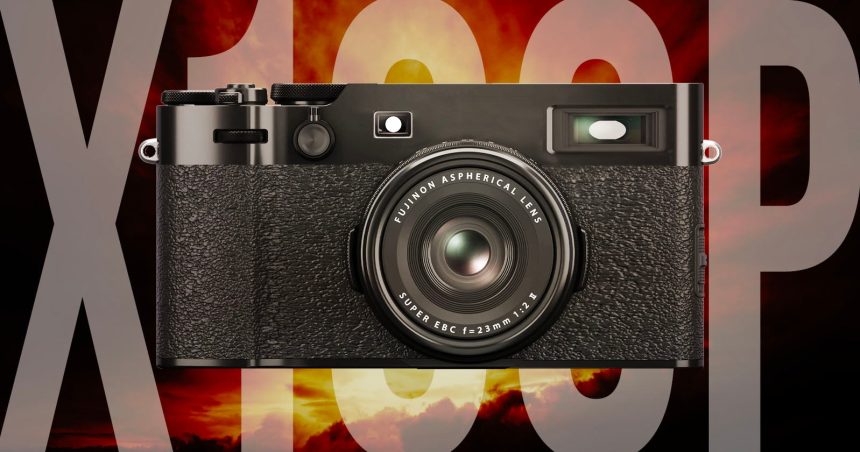
Panoramic photography has a cult following, and for good reason. Those impossibly wide frames — twice the width of a standard negative — capture landscapes, cityscapes and crowds in a way no regular camera can. The catch? Almost everything that shoots true panorama is analog, and increasingly hard to find.
That’s the gap photographer Jaron Schneider is poking at in a new opinion piece on PetaPixel. After a year deep in panoramic shooting — starting with the legendary Hasselblad XPan, then a Fujifilm TX-1, and even venturing into 3D-printed 120 medium-format rigs from makers like Sasquatch, CCB and Exposing Engineering — he’s reached an obvious conclusion: digital shooters deserve a panoramic option too.
His pitch is delightfully specific. Take the beloved Fujifilm X100 formula — the retro fixed-lens compact that’s become a genuine cultural phenomenon — and reimagine it as a panoramic machine. He even floats a name for the hypothetical: the X100P.
It’s worth being clear about what this is: not an announcement, not a leak, not a product you can pre-order. It’s a well-argued plea. But it’s a plea worth taking seriously, because the logic is hard to ignore.
Consider the pieces Fujifilm already has on the board:
- Panoramic pedigree. The XPan and TX-1 were Fujifilm collaborations — the company has literally built dual-format wide cameras before.
- A red-hot brand. The X100 line has been so popular it’s spent stretches sold out and reselling above retail. Fujifilm knows exactly how to make a fixed-lens compact people obsess over.
- Sensor know-how. Fujifilm’s X-Trans and medium-format sensor lineup gives it the engineering range to chase a wider, panoramic-friendly frame.
Why does this matter beyond one writer’s wishlist? Because the digital camera market has spent years rewarding cameras that offer character over raw spec sheets. The X100 series itself is proof: people don’t buy it because it out-resolves a mirrorless flagship, they buy it because it’s a joy to use and produces a distinctive look. A native digital panoramic camera — no stitching, no cropping in post — would be exactly that kind of character-first object.
Right now, anyone wanting that wide cinematic frame digitally is stuck stitching multiple shots in software or cropping a standard sensor down, losing resolution in the process. A purpose-built panoramic digital body would sidestep all of it.
Will Fujifilm bite? There’s no indication it’s working on anything of the sort, and concept pieces like this rarely translate into shipping hardware. But every now and then a manufacturer reads the room. The XPan became a legend precisely because someone decided the niche was worth serving. A digital successor, X100-style, could pull off the same trick — and judging by the enthusiasm such proposals generate, the audience is already waiting.