Forget the sci-fi fantasy of walking, talking humanoids doing your laundry. Sanctuary AI has taken a far more pragmatic route — and it just paid off on a real factory floor. On June 17, 2026, the company announced that its physical AI achieved world-class performance on a genuinely tricky industrial task: plugging wires at a Tier 1 automotive supplier.
If that sounds unglamorous, it isn’t. Wire insertion is one of those deceptively hard manipulation problems that has stumped automation for years. It demands precise force control, fine dexterity, and the ability to react to tiny variations in position and resistance — the sort of thing human assembly workers do without thinking, and robots historically do very badly. Nailing it at production-ready quality is a serious milestone.
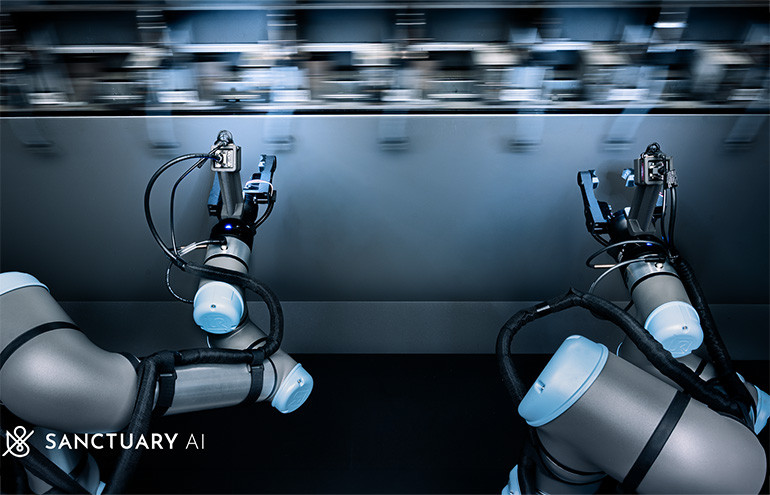
The clever part of Sanctuary AI’s strategy is where the intelligence lives. Rather than betting everything on bespoke humanoid hardware that may or may not arrive on schedule, the company deployed its physical AI on existing and next-generation industrial robots already in use. In other words, the brains are portable. The same software stack that mastered wire-plugging can, in principle, be dropped onto machines that manufacturers already own and operate.
That distinction matters enormously for anyone tracking the robotics industry. The current wave of humanoid hype has centered on the robot bodies — the more human-shaped and photogenic, the better. Sanctuary AI is quietly arguing that the body is not the bottleneck. The hard problem is the physical AI: the perception, control, and learning systems that let a machine handle the messy, unpredictable physical world with human-like competence.
By validating that AI on a partner’s actual production line — not in a curated demo lab — Sanctuary is making a pointed claim about readiness. This isn’t a proof-of-concept clip designed to rack up views. It’s a performance benchmark measured against the standards of a Tier 1 automotive supplier, an industry not known for tolerating flaky automation.
A few things worth keeping in mind:
- It’s software-first. The value sits in the AI, which can migrate across robot platforms rather than being locked to one form factor.
- It targets a real pain point. Complex manipulation like wire insertion has long resisted reliable automation.
- It’s enterprise, not consumer. This is industrial robotics technology aimed at manufacturing, not a gadget you’ll be unboxing at home.
The broader takeaway is a shift in framing. For years, the humanoid conversation has been about hardware milestones and dramatic reveals. Sanctuary AI’s approach suggests the more consequential race is happening in the control loop — teaching machines to do useful, fiddly physical work at production quality, today, on hardware that already exists. That’s a less flashy story than a robot doing backflips, but it may be the one that actually reshapes factories first.