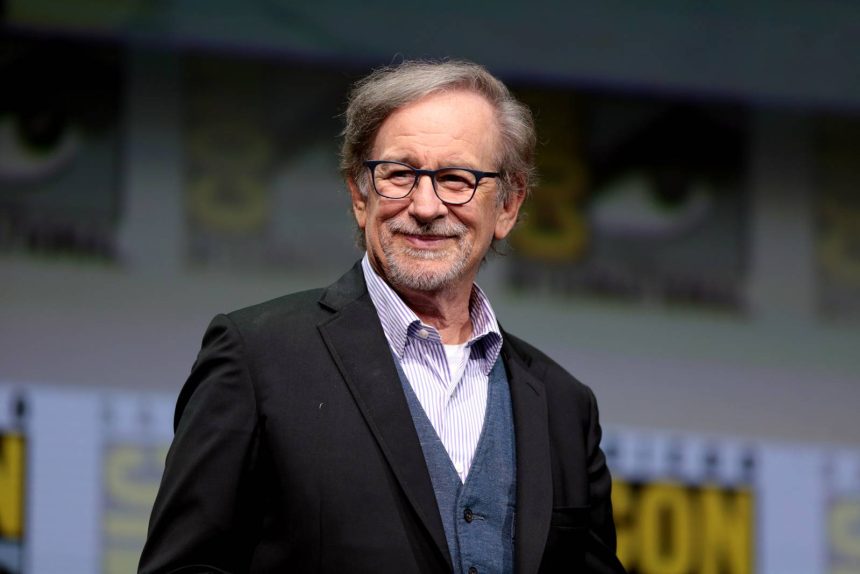
Steven Spielberg is mining the strangest corners of the internet for his next film. The director’s Amblin, in partnership with Scott Stuber’s United Artists and Amazon MGM Studios, has acquired the film rights to The Mandela Catalogue — arguably the most influential horror series ever born on YouTube.
The move comes after Spielberg’s Disclosure Day underperformed at the box office, and the veteran filmmaker is clearly looking beyond the usual Hollywood pipeline for fresh, unsettling material. Reaching for a viral analog-horror phenomenon is an unexpected pivot — and a telling one about where cultural momentum now lives.
For the uninitiated, The Mandela Catalogue is a landmark of the “analog horror” genre: a creator-driven web series that weaponizes the grainy aesthetic of old public-access broadcasts, emergency alert screens, and degraded VHS tapes. Instead of jump scares and gore, it trades in dread — corrupted transmissions, distorted faces, and entities that impersonate the people you trust. It built a devoted following one cryptic upload at a time, without a studio, a marketing budget, or a red carpet.
That grassroots pedigree is exactly what makes the deal fascinating. A YouTube series with no traditional infrastructure is being handed to one of the most decorated directors in cinema history, backed by the muscle of Amazon MGM Studios’ distribution machine and United Artists’ production savvy. It’s a collision of DIY horror culture and legacy Hollywood that few would have predicted.
There’s an obvious risk here, and horror fans are already voicing it. Analog horror thrives on ambiguity, low-fidelity texture, and the intimacy of watching alone at 2 a.m. on a laptop. Translating that claustrophobic, screen-bound unease into a polished theatrical experience is a genuine creative challenge — the very production values that define a Spielberg film could sand away the rough edges that made the source material terrifying in the first place.
Still, if anyone can navigate that tension, it’s a director whose career has spanned everything from Jaws to War of the Worlds. Spielberg has a long history of making the ordinary feel menacing, and the analog-horror playbook — the everyday made wrong — is arguably right in his wheelhouse.
No release date, cast, or plot details have been shared, and it’s not yet clear how faithfully the film will follow the series’ fractured, non-linear storytelling. But the acquisition alone is a milestone: it signals that studios are treating internet-native horror not as a novelty, but as legitimate blockbuster IP. For a genre that grew up in the comment sections and community forums of YouTube, that’s a remarkable graduation.
Whether the leap from browser tab to big screen preserves the nightmare or dilutes it remains to be seen. Either way, the boundary between viral web content and mainstream cinema just got a lot blurrier.