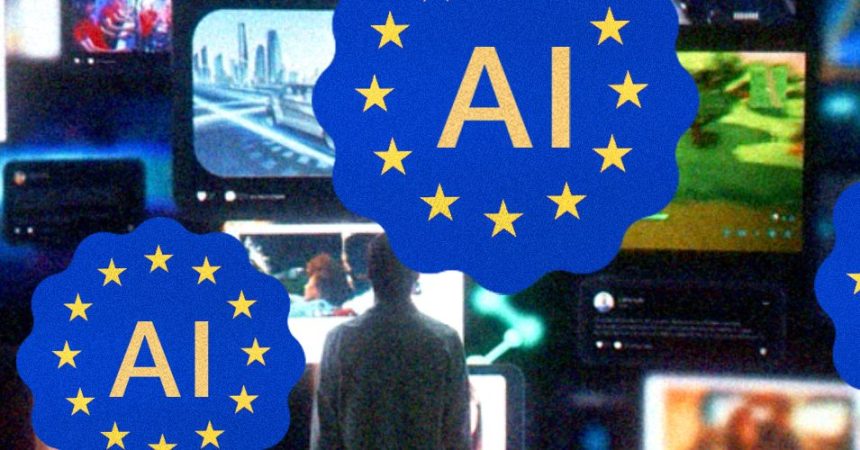
The virtual influencer boom just collided with the rulebook. As of August 2, 2026, the EU AI Act requires that AI-generated or manipulated promotional content be clearly labeled — and for a generation of creators who built entire personas out of pixels and prompts, that changes everything.
The stakes are enormous. The virtual influencer market is estimated at $14.5 billion and projected to hit $110.4 billion by 2033, growing at a reported 33.6 percent annually. According to research from the agency Billion Dollar Boy, 79 percent of marketers are increasing their spend on AI-generated creator content. Brands love these characters: affordable, scalable, endlessly brand-safe, and immune to scandal.
Take Clarissa Mansbridge, who lives in Brisbane and stepped back from entertainment industry work to care for her son. She built the “humbly wealthy, wholesome” AI persona Mia Metaverse and now earns around $6,000 a month through brand collaborations and designing bespoke AI influencers. Her approach isn’t to hide the AI — it’s to make a fully controlled, scandal-free persona that thrives precisely because it’s predictable. Ironically, the tougher the disclosure rules, the more valuable that predictability may become.
The legal picture, though, is murky. Under Article 50 of the AI Act, providers and deployers must disclose when audio, image, video, or text has been artificially generated. But content that forms part of an “evidently artistic, creative, satirical, fictional, or analogous work” gets softer treatment — a loophole wide enough to drive confusion through.
Kai Zenner, digital policy adviser to MEP Axel Voss, admits the Act was drafted “too early, too abstractly,” back when ChatGPT had only just launched. He warns that upcoming revisions will demand influencers reveal not just that content is synthetic, but where they come from, what they want, and how they’re financed. Creators, he says, risk being caught between overlapping regimes — the AI Act, copyright law, audiovisual rules, consumer protection, and the proposed Digital Fairness Act — where one law calls their content lawful and another calls it unlawful.
Platforms aren’t waiting for lawmakers. In mid-July, TikTok announced a detection system to catch AI spam it says is “crowding out original creators.” Meta now stamps an “AI info” label across Facebook, Instagram, and Threads. Social media consultant Matt Navarra puts it bluntly: “The platforms are swinging at AI content with a sledgehammer when what they need is a scalpel.” Human creators, he warns, will get flagged too — even for minor AI touch-ups like grammar fixes.
Some are leaning in, accepting that detection may throttle their reach but backing the rules to avoid misleading audiences. Others see it as just another shift, like the jump from 2D to 3D animation.
The real question is whether regulation can protect the storytelling and emotional connection — not flatten it.