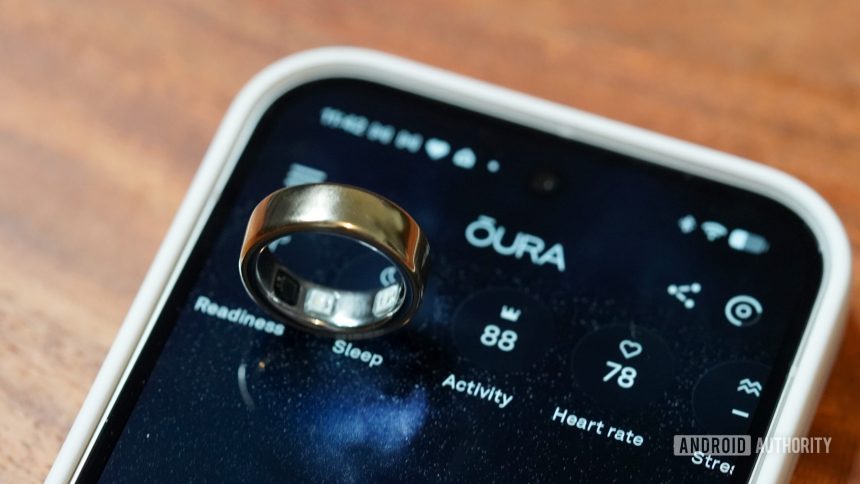
Oura has built its reputation on turning a slim titanium band into a serious health instrument, but the company is now facing a legal test of its most-marketed feature. A proposed class action lawsuit filed on August 20, 2026, in the U.S. District Court for the Northern District of California accuses Oura of misleading customers about how accurately its rings measure sleep stages.
The complaint’s most memorable line does the heavy lifting: it alleges that some of Oura’s sleep-stage tracking has little more than a “coin flip’s chance” of being accurate. That’s a pointed claim for a device that has spent years positioning itself as a nightly authority on light, deep and REM sleep — the exact metrics that persuade many people to slip a US$399 ring onto their finger in the first place.
Sleep-stage classification is genuinely hard. Distinguishing light from deep sleep, or catching the shift into REM, is normally the job of polysomnography in a clinical lab, with electrodes reading brain activity directly. Consumer wearables approximate all of this from the wrist or finger, blending heart rate, heart-rate variability, temperature and movement. That approximation is where the gap between marketing confidence and real-world precision tends to open up — and it’s precisely the gap this lawsuit is probing.
The timing is awkward. The current flagship, the Oura Ring 5, arrived only recently: preorders opened on May 28, 2026, and the ring began shipping and selling at retail on June 4, 2026. Oura pitched it as a meaningful hardware leap, and on paper it is:
- 40% smaller than its predecessor
- Thickness reduced from 3.5mm to 2.8mm, depending on ring size
- More accurate sensing and enhanced battery life
Pricing sits at US$399 for the base finishes in Silver and Black, rising to US$499 for premium finishes. Notably, “more accurate sensing” was part of the Ring 5’s own sales story — which makes a lawsuit centered on accuracy claims land with extra sting.
It’s worth stressing what this suit is and isn’t. A proposed class action is an allegation, not a finding; the “coin flip” characterization comes from the plaintiffs, and Oura has yet to be tested on the merits. Courts will decide whether the marketing crossed from optimistic to deceptive, and whether the class gets certified at all.
Still, the case touches a nerve that runs well beyond one brand. The entire wearables category leans on the premise that finger- and wrist-based sensors can stand in for lab-grade measurement. If a court starts scrutinizing how those numbers are advertised, every company selling sleep scores has reason to read the filings closely — even the ones not named in them.