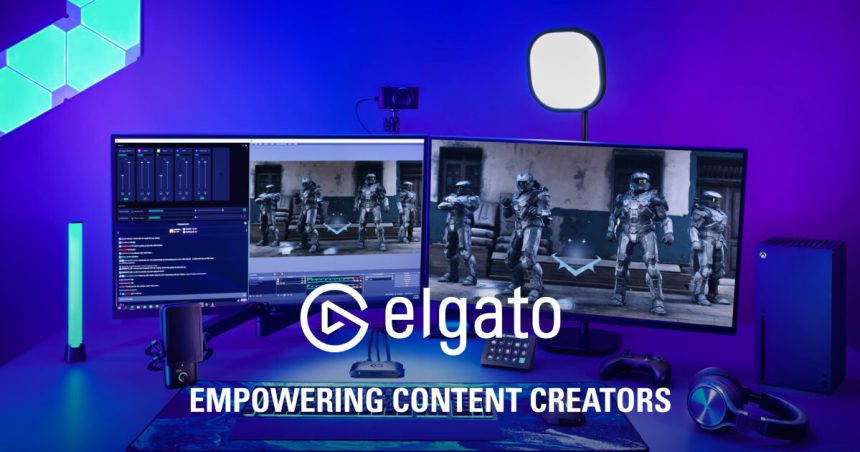
Working from home no longer means squinting into a webcam under a flickering ceiling bulb and sounding like you’re broadcasting from inside a shoebox. Elgato — CORSAIR’s creator-focused brand — has two pieces of kit that quietly upgrade the whole video-call and streaming experience, and neither asks you to become a production engineer to use them.
Start with the light, because everyone’s on camera now. The Elgato Key Light Air MK.2 went on sale on July 23, 2026, and it’s built around a 15-inch LED panel that pushes up to 2100 lumens. Crucially, you can dial the color temperature anywhere from 2900 to 7000 K, so you’re not stuck choosing between candlelit gloom and hospital-corridor white. The panel uses OSRAM LEDs with flicker-free output — which matters more than it sounds, since flicker is exactly what turns an otherwise crisp video feed into a strobing mess.
It’s USB-C powered, has touch controls on the unit itself, and plays nicely with phones, computers and the Stream Deck for anyone who wants one-tap scene changes. Pricing is refreshingly transparent: US$139.99 if you want the version with the mount, or US$119.99 for the light on its own.
Then there’s the sound problem. If lighting is where amateur setups fall down first, audio is a close second — and the Elgato Wave XLR Pro is the fix for people who’ve outgrown a USB mic. It offers two fully independent XLR inputs, each with 80 dB of clean gain, which is plenty of headroom for dynamic broadcast mics that normally beg for a preamp.
What sets it apart is the mixing. The Wave XLR Pro provides five hardware-based mixes with zero-latency monitoring, so you can send one blend to your stream, another to your recording, and a third to your own headphones — all without the maddening delay that ruins live monitoring. A few smart touches round it out:
- Built-in Maximizer effect to keep loudness consistent, so you’re not riding a fader mid-sentence
- Per-channel Ducking that automatically lowers other audio sources the moment you start talking
The Wave XLR Pro was announced on March 3, 2026, with shipping slated for Q2 2026, and carries a price of US$349.99. That’s clearly aimed at the serious end — podcasters, streamers and anyone running a proper multi-source audio chain rather than a single desk mic.
Taken together, these two devices sketch out Elgato’s broader pitch: your home office and your streaming rig are increasingly the same room, and the tools that make you look and sound professional shouldn’t require a sound engineer to set up. Good light, clean audio, tap-to-adjust controls — it’s a low-friction way to stop looking and sounding like you’re phoning it in, even when you literally are.