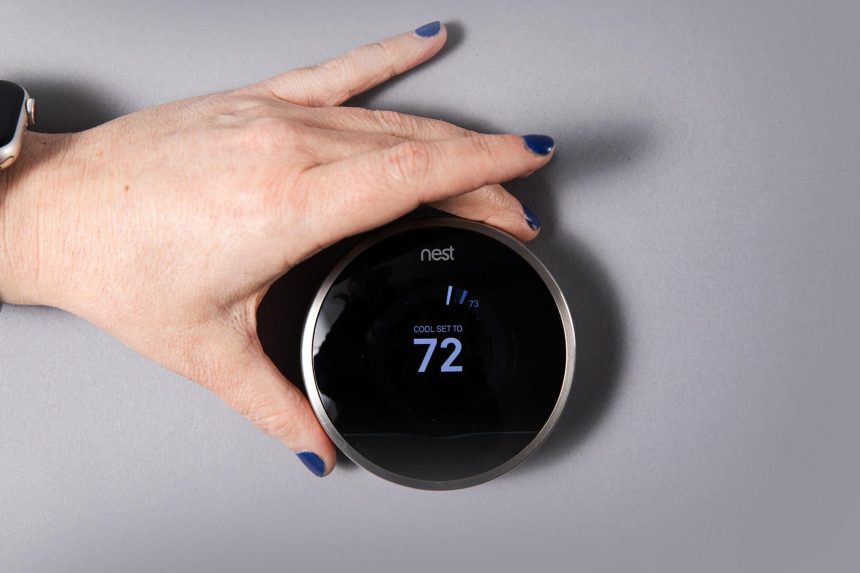
Every great tech origin story needs a reluctant hero, and Nest has a perfect one. Tony Fadell — one of the minds behind the iPhone — was supposed to be done. Instead, a deeply unsatisfying encounter with an ugly, overpriced, hopelessly dumb wall thermostat dragged him back into building things. The result wasn’t just a gadget. It was an argument that the most boring object in your house deserved to be reinvented.
That story is the subject of a recent episode of Version History, where The Verge’s David Pierce, Nilay Patel, and Jennifer Pattison Tuohy dig into the early, scrappy days of Nest and Fadell’s frustration with the outdated controls that quietly run our homes. It’s a reminder that the smart home as we know it didn’t start with voice assistants or app ecosystems — it started with someone refusing to accept that a temperature dial had to be miserable.
More than a decade later, that ambition is still alive in Google’s current lineup, which has split into two distinct philosophies.
The Google Nest Thermostat, launched on October 12, 2020, is the accessible entry point. It runs US$129 (currently on sale for US$89) and keeps things lean: a 2.4-inch QVGA IPS display at 240 x 320 pixels, dual-band Wi-Fi covering 802.11b/g/n on 2.4 GHz and 802.11a/n on 5 GHz, and a battery backup handled by two AAA 1.5V alkaline cells. Crucially, it sips power — drawing less than 1 kWh per month, which is exactly the kind of stat Fadell would have appreciated for a device that’s supposed to be saving energy, not quietly wasting it.
For people who want the full vision, there’s the Google Nest Learning Thermostat (4th gen), released on August 20, 2024 and available through the Google Store and Amazon. It carries a US$280 list price (currently US$229.99 on sale) and leans into presence: a 2.7-inch screen that’s 60% larger than the previous generation, designed to be read across a room rather than squinted at up close. Google also bundles a Nest Temperature Sensor (2nd gen) in the box, so the thermostat can balance comfort between rooms instead of obsessing over one hallway.
Installation, historically the dread of any DIY thermostat swap, has also been smoothed over. The Learning Thermostat (4th gen) requires no C wire in most homes — a small spec line that erases one of the biggest reasons people gave up on smart thermostats entirely.
What’s striking, listening to the Nest story now, is how much of the original mission still holds. The hardware got bigger screens and smarter sensors, but the core idea — that your thermostat should work for you, quietly and intelligently — is the same one that pulled Fadell out of retirement. Sometimes the boldest reinvention is just refusing to leave the dull stuff alone.