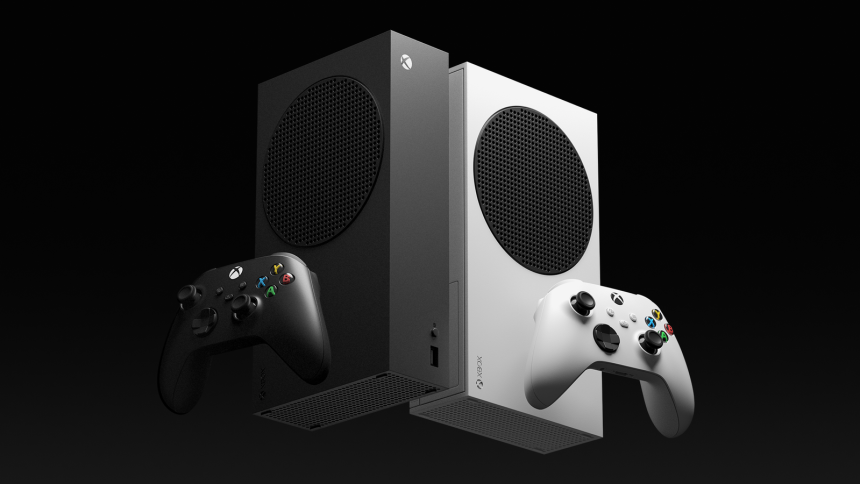
Hardware is getting more expensive, and the tech giants want you to know it isn’t an accident. Over the past week, Microsoft, Apple, and Lenovo have all signaled that they don’t expect component costs to ease anytime soon — comments amplified by bullish forecasts from memory maker Micron. The timing couldn’t be sharper: Valve’s Steam Machine launches today, June 29, 2026, and it lands right in the middle of that pricing turbulence.
Let’s start with the number everyone is fixated on. The Steam Machine opens at US$1,049 (€1,039 / £879) for the 512GB base model. Want more storage and a controller in the box? The 2TB bundle with the Steam Controller runs US$1,428. That’s a console-shaped device wearing a gaming-PC price tag — which is exactly the conversation Big Tech’s warnings have been priming us for.
So what does that money buy? Valve has built a compact powerhouse around custom AMD silicon. The brains are a Zen 4 six-core, twelve-thread CPU paired with an RDNA 3 GPU sporting 28 compute units. Valve pegs overall performance at roughly six times that of the Steam Deck, a leap that reframes the little box as a genuine living-room contender rather than a handheld scaled up.
The headline ambition is 4K 60fps gaming, leaning on AMD’s FSR 3 upscaling to hit those targets without melting under native rendering loads. For anyone who has watched the Steam Deck punch above its weight at lower resolutions, the idea of that same SteamOS ecosystem stretching to a 4K display is the genuinely exciting part here.
Buying one, however, requires a little patience and a touch of luck. Rather than the usual first-come, first-served scramble, Valve is rolling out purchase invitations via a randomized draw reservation system beginning the week of June 29, 2026. It’s a deliberate hedge against scalpers and stock chaos — and, perhaps, a nod to a supply environment that the rest of the industry keeps describing as anything but relaxed.
That backdrop matters. When Micron sounds confident about pricing, it’s usually because demand for memory and components is outpacing supply, and that pressure flows downhill to everything from laptops to consoles. Against that, a $1,049 SteamOS machine offering six-times-Deck performance reads less like a splurge and more like a snapshot of where gaming hardware sits right now.
The Steam Machine isn’t trying to undercut anyone. It’s a statement that Valve can deliver a small, powerful, open PC for the TV — and it’s arriving exactly as the wider market warns that the days of falling prices may be behind us. Whether that makes today’s launch feel like good value or an early warning shot probably depends on how the next few months of component pricing actually play out.