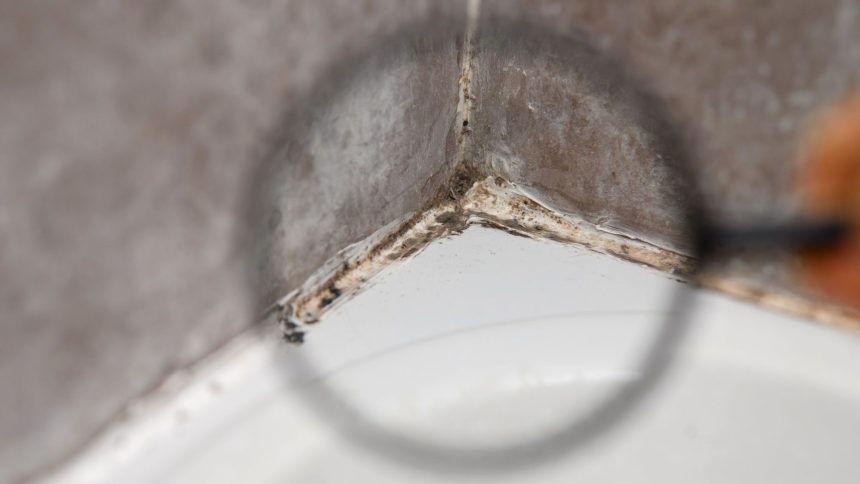
Heatwaves push us to obsess over AC settings and wilting lawns, but there’s a quieter opportunist thriving in all that heat and humidity: the mold creeping along your bathroom caulk. And according to Guy Chapman, a silicone sealant specialist at United Silicones, the real culprit usually isn’t sloppy cleaning — it’s the sealant itself.
Here’s the mechanism. When caulking is first fitted properly, it forms a perfect seal. But it doesn’t stay that way. “Standard bathroom sealant looks solid, but over time it shrinks, stiffens and pulls away from the bath edge by fractions of a millimeter,” Chapman explains. Moisture sneaks into that microscopic gap, and the dark, damp pocket behind the sealant becomes an ideal nursery for mold spores. Once that happens, scrubbing the surface is futile — “no amount of bleach can fix” water trapped behind the joint.
The failure point typically shows up 6–12 months after installation, and it often slips by unnoticed. Heatwaves accelerate it, but so does the back half of the year: as bathrooms cool faster than the rest of the house, condensation builds and the problem compounds. That’s the moment, Chapman says, when homeowners unknowingly cross from cleanable mold to permanent growth.
The fix is refreshingly low-tech. Instead of ripping out the old sealant or dousing it in chemicals, Chapman recommends laying down a physical barrier — a cheap, self-adhesive silicone bath strip. “This works because it doesn’t rely on chemical resistance,” he says. “It physically seals over the vulnerable joint, preventing water from ever reaching the failing sealant underneath.”
One option that fits the bill is Migroa’s Self-Adhesive Silicone Caulk Tape, recently listed at $2 (down from $4) at Walmart. It’s waterproof, oil-resistant and heat-tolerant, designed for baths, sinks and countertops, with a peel-and-stick application that needs no tools.
Application matters, though. Get it wrong and the strip won’t seal. Chapman’s instructions are simple:
- After cleaning, let the bath edge dry for at least 12 hours — any trapped moisture wrecks adhesion.
- Apply the strip directly over the existing sealant, pressing firmly along the joint to form a continuous waterproof cap.
Why does a thin strip outperform the sealant it covers? Because silicone sheet behaves nothing like cured sealant compound. “It doesn’t shrink, crack or become porous over time,” Chapman says. “Once applied, it creates a stable moisture barrier that mold simply can’t penetrate.” Where traditional sealant cures, ages and degrades, the strip stays flexible indefinitely, even under constant hot-water exposure.
The payoff is a one-and-done barrier rather than an endless cleaning cycle. “For less than the cost of a coffee, you’re stopping mold at the structural level,” Chapman says — “one of the simplest preventative fixes in the home, and one of the most effective.”