Google is doubling down on the idea that a fitness tracker doesn’t need a display at all — and according to the company’s design director, the response to the Fitbit Air proves that gamble paid off. Speaking about the $99.99 device, the lead designer behind it argued that the reception since launch confirmed they “made the right decision” going screen-free.
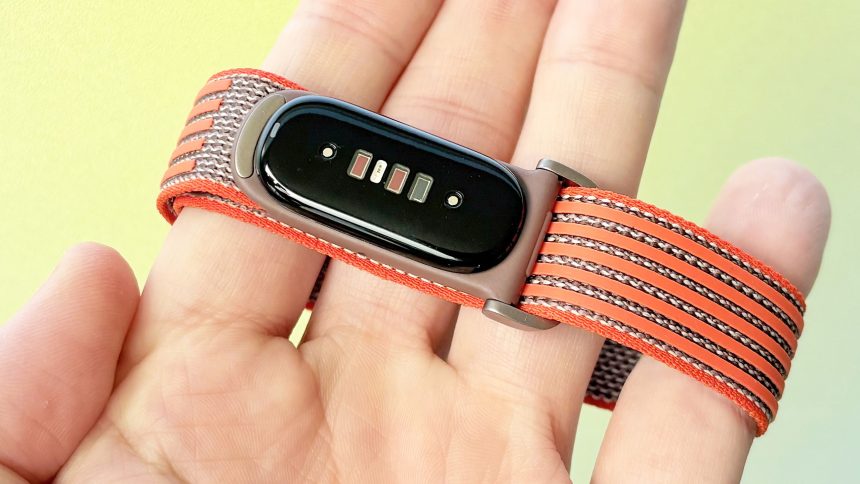
It’s a bold stance in a market obsessed with cramming ever-brighter AMOLED panels onto our wrists. The Fitbit Air throws that out entirely. Instead of a screen, you get a small pebble-shaped device that weighs just 0.03 pounds — light enough that you’ll likely forget it’s there. All your data lives in the app, and the hardware simply gets on with the job of measuring you.
And it measures quite a lot. The Air offers 24/7 heart rate tracking, heart rhythm monitoring with AFib alerts, SpO2, resting heart rate, heart rate variability, plus sleep stages and duration. That’s a genuinely comprehensive health suite for a tracker at this price, covering most of what mainstream users actually want from a wearable.
Ditching the screen brings a practical bonus, too: battery life. Google rates the Air for up to a week between charges, a figure that shames most smartwatches and even a few of its screen-equipped siblings. There’s no display constantly sipping power, so the tiny cell goes a long way. It’s also water resistant up to 50 meters, meaning pool swims and showers are no problem.
Pricing is where the Air makes its clearest argument. The standard model lands at $99.99 in the US and £84.99 in the UK, with a Special Edition available for $129.99. That undercuts a huge swathe of the wearable market and positions the Air squarely as an accessible entry point into Google’s health ecosystem.
The launch also carries some brand baggage worth noting. Ever since Google absorbed Fitbit, plenty of people have wondered whether the Fitbit name would quietly disappear. The existence of a fresh, distinctly Fitbit-branded product — one the company is willing to build a whole design philosophy around — suggests the label isn’t going anywhere just yet.
The Air was unveiled on May 7, 2026, with pre-orders opening ahead of shipping that began on May 26. It’s now on sale, and the early signs seem to have vindicated the screen-free approach. Whether the wider wearable world follows Google’s lead is another question, but the company clearly believes less screen can mean more.
- Price: $99.99 (US) / £84.99 (UK); Special Edition $129.99
- Design: screenless, pebble-shaped, 0.03 pounds
- Battery: up to a week
- Water resistance: up to 50 meters
- Health tracking: 24/7 heart rate, AFib alerts, SpO2, HRV, sleep stages