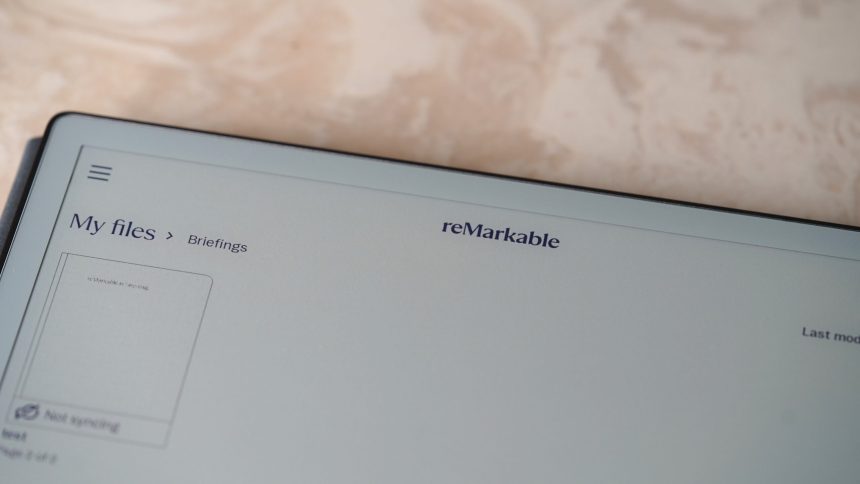
There is a special kind of tinkerer who looks at a premium e-ink tablet and thinks, what if this could gaslight me? That’s more or less what happened when Maxime Rivest turned a reMarkable Paper Pro into a working replica of Tom Riddle’s diary — the cursed notebook from the Harry Potter saga that writes back to whoever scribbles in it.
The trick was shown off on July 5, 2026, and it leans on a project called Fable. The concept is gloriously simple in its menace: you write a line by hand, your words fade away like enchanted ink soaking into old parchment, and then a fresh reply materialises in their place — this time generated by a large language model. No wand required, just prompts flowing to an AI and answers flowing back onto the page.
Why the reMarkable Paper Pro specifically? It’s arguably the ideal canvas for this sort of illusion. The device is built around a paper-like e-ink display and a stylus-first writing experience, so the tactile feel of putting pen to page is already there. Add a mechanism that clears your handwriting and streams in an AI response, and the effect stops being a gimmick and starts feeling genuinely uncanny — the closest most of us will get to owning a genuinely haunted object.
What makes the demo land isn’t raw technology so much as staging. Plenty of apps will happily let you chat with an LLM. Very few make the conversation feel like it’s coming from something that has been waiting fifty years inside a book for someone to write in it. The disappearing-ink flourish does the heavy lifting: it removes the interface, hides the machinery, and leaves only the illusion of a page that thinks.
A few sensible caveats. This is a community modification, not an official reMarkable product or feature — it’s the kind of thing that circulates as a proof of concept before anyone talks about polish, reliability or availability. There’s no pricing attached to the Fable experiment itself, and it isn’t a shrink-wrapped download you’ll find in a store. Treat it as inspiration rather than a purchase decision.
Still, it’s a lovely reminder of what these devices can become in the right hands. The reMarkable line was designed to strip away distraction and get you back to writing; here, that same restraint gets bent into something theatrical and a little unnerving. The hardware doesn’t change — the framing does.
If nothing else, the project raises an obvious follow-up question for anyone with an e-ink tablet gathering dust in a drawer: what else could a page that answers back be persuaded to say? Just maybe don’t pour your soul into it.