Turning a tractor around at the end of a row sounds trivial until you try teaching a machine to do it in a cramped headland without clipping a fence, a vine or a startled worker. That’s exactly the problem Agtonomy has been chipping away at, and its latest software update finally cracks one of the toughest maneuvers in autonomous farming: the multi-point turn.
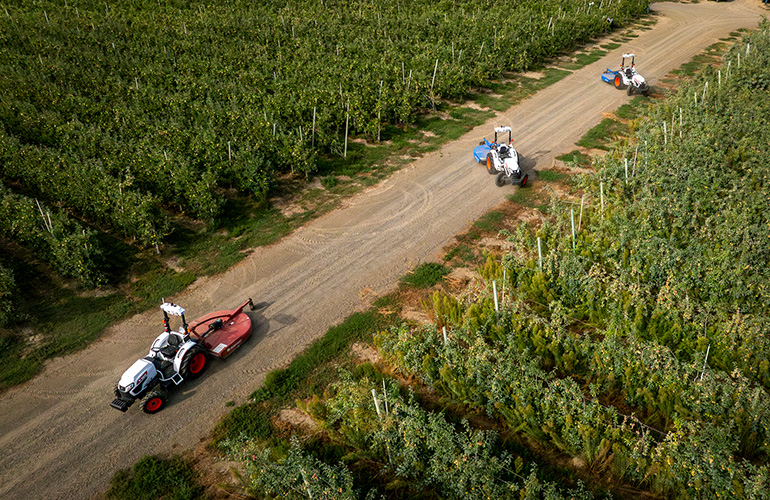
The company has rolled out autonomous multi-point turning for its commercial off-road platform, alongside beefed-up field data collection. In plain terms, the equipment can now execute complex, back-and-forth maneuvers in tight spaces — the kind of three-point-turn choreography a human operator does instinctively — with no one in the seat. For orchards, vineyards and specialty crops where rows are narrow and headlands are unforgiving, this is the difference between a robot that works most of a field and one that works all of it.
Agtonomy’s system leans on advanced sensing and artificial intelligence to read its surroundings and plan those turns on the fly. The headland has always been the awkward part of any autonomy pitch — plenty of platforms can drive a straight line, far fewer can gracefully reverse, reposition and continue without human hand-holding. Getting this right is what lets a single supervisor oversee equipment across a property instead of babysitting every turn.
The clearest expression of all this is the Kubota M5 Narrow autonomous tractor, built around Agtonomy’s autonomous solution. Kubota supplies the hardware — a 105.7-horsepower diesel workhorse tuned for narrow rows — while Agtonomy contributes the brains. The pairing was shown at CES 2026 in Las Vegas back in January, where it was presented as commercially available rather than a someday concept.
The other half of the update is easy to overlook but arguably just as valuable. Enhanced field data collection means the platform isn’t only doing the work — it’s logging what it sees while doing it. Every autonomous pass becomes an opportunity to gather agronomic detail, and over a season that adds up to a picture of the field that no clipboard-toting scout could match.
Why does turning matter so much? Consider the math:
- Every headland turn is dead time and a pinch point for errors.
- Narrow-row crops leave almost no margin for a wide arc.
- Full autonomy only pays off if the machine can finish the job unattended, edge to edge.
By solving the turn and turning routine passes into data harvests, Agtonomy is pushing its platform from a clever demo toward genuinely hands-off field work. It’s the unglamorous engineering — the stuff that happens at the far end of the row where nobody’s watching — that decides whether autonomous farming actually earns its keep.