There’s a delicious irony in the US Air Force spending taxpayer dollars on drones its own government has spent years trying to ban. But that’s exactly what’s happening: the 90th Contracting Squadron issued a solicitation on August 14 2026 to acquire a small fleet of DJI quadcopters for training at nuclear missile installations.
The logic is straightforward, if a little uncomfortable. If you want to teach airmen how to spot, track and counter hostile commercial drones, you need to put the actual hardware in their hands. And when it comes to consumer-grade aircraft buzzing around sensitive sites, DJI’s machines are, in the Air Force’s own framing, the most statistically probable real-world threat. Training against a hypothetical gadget is one thing; training against the exact model an intruder is most likely to fly is another.
According to the solicitation, the shopping list is refreshingly specific:
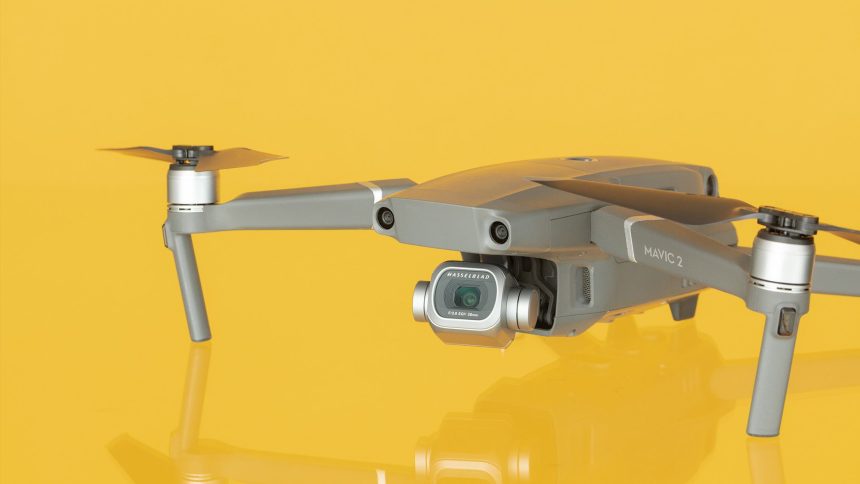
- Two refurbished DJI Mavic 2 Pro quadcopters, each with a Fly More kit
- Two DJI Mini 3 Pro drones
- Two DJI Avata 2 Fly More combos
- Six payload release devices
That mix is telling. The Mavic 2 Pro is the classic camera platform — the kind of drone you’d expect a curious or malicious operator to point at a fenced perimeter. The Mini 3 Pro represents the featherweight, easy-to-fly end of the spectrum that slips under regulatory radar as readily as literal radar. And the Avata 2, an FPV cinewhoop-style machine, brings agile, low-altitude, first-person flying into the picture. Add half a dozen payload release devices and the training scenarios start to look a lot more serious than nuisance overflights.
The procurement itself is still in motion. The government intends to make a firm, fixed-price commercial award, with vendor quotes due by August 24 2026. As of now the deal hasn’t closed and no purchase price has been disclosed — this is a solicitation, not a receipt.
The political backdrop makes the whole thing worth watching. DJI has faced mounting restrictions in the United States over security and data concerns, with various agencies barred from operating its drones. Buying the same hardware for adversary-simulation training is a neat acknowledgment that a ban on paper doesn’t make the drones disappear from the sky. If anything, the fact that these aircraft remain the benchmark threat is precisely why they’ve been targeted for restriction in the first place.
For anyone who follows the drone world, it’s a reminder of just how thoroughly DJI dominates the consumer airspace — enough that the US military treats its catalog as the definitive template for what a real intrusion looks like. Sometimes the best way to defend against a product is to buy a few and study them very, very closely.