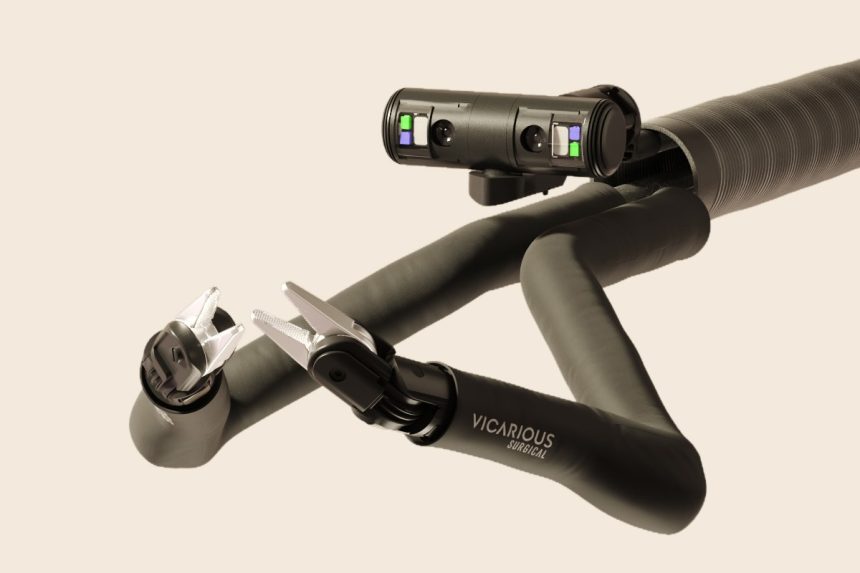
The surgical robotics dream is officially in retreat at Vicarious Surgical. The company’s board has thrown in the towel, recommending that shareholders approve a plan to dissolve the business and liquidate its assets. The decisive vote is set for a special stockholder meeting on July 21, 2026.
For anyone who followed the promise of miniaturized robotic surgery, this is a sobering turn. Vicarious spent years developing a single-port robotic system aimed at abdominal procedures — an approach designed to slip capable instruments through one small incision rather than several. On paper, it was exactly the kind of ambitious, tightly engineered platform meant to reshape the operating room.
The financials tell a harsher story. According to the company, Vicarious has racked up recurring operating losses and negative cash flows since inception. That is the sort of phrase that reads like boilerplate in a filing but signals something terminal when the board starts talking about dissolution rather than another funding round or a pivot.
What makes this especially uncomfortable for investors is the uncertainty around what, if anything, is left. The board has said plainly that it cannot predict how much shareholders would recover, or when. In practical terms, that is a warning not to expect a tidy payout. When a company winds down, secured obligations and creditors typically get first claim on whatever the liquidation raises, and equity holders often find themselves at the back of the queue.
It is a familiar arc in the medical-device world, where the gap between a compelling engineering concept and a commercially viable, regulator-approved product is enormous. Building a robotic surgical platform is capital-intensive: years of R&D, clinical validation, and manufacturing scale-up all have to happen before meaningful revenue arrives. Many well-funded startups simply run out of runway before that revenue materializes, and the single-port niche — while technically elegant — is a crowded and demanding corner of the market.
The July 21 meeting is essentially a formality of consent rather than a debate about strategy. The board is not floating alternatives; it is asking shareholders to ratify the endgame. Assuming approval, the company would begin the process of shutting down operations and converting what remains into cash for distribution, subject to the priorities that dissolution imposes.
For the broader robotics sector, it is a reminder that hardware ambition needs deep pockets and patience in equal measure. Vicarious Surgical set out to shrink the surgical robot and expand what it could do through a single incision. The technology may have been forward-looking, but the balance sheet ultimately dictated the outcome — and it points squarely toward the exit.