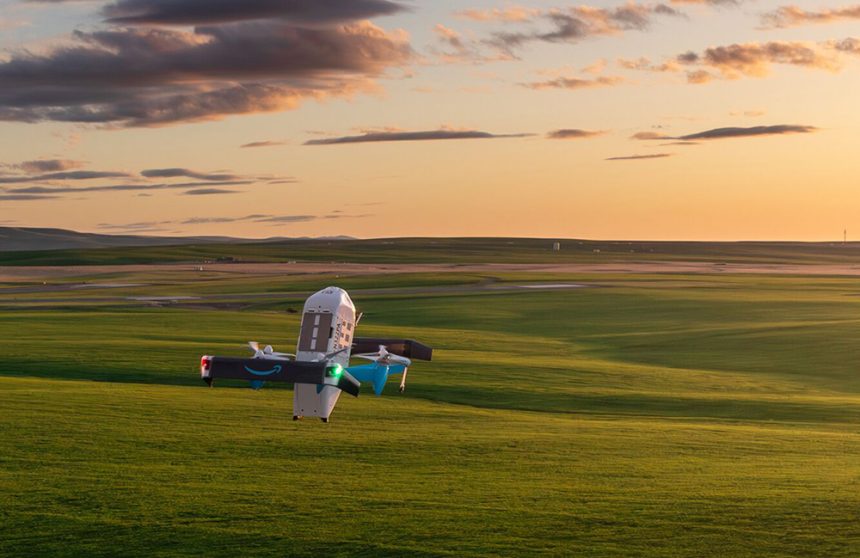
Amazon is putting serious weight behind its flying couriers. The company said it plans to expand its Prime Air drone delivery service to nearly 500 U.S. cities and towns by the end of 2026 — a scale that would take autonomous package drops from a novelty into something resembling everyday infrastructure.
The announcement, made on August 19, 2026, sets a fairly aggressive target. Right now the service operates across just seven states — Arizona, Florida, Kansas, Louisiana, Michigan, Nebraska and Texas — so getting to hundreds of new locations before the calendar flips is no small logistical leap.
The pitch is speed. Amazon says eligible orders can arrive in as fast as 30 minutes, which is the kind of turnaround that makes a drone genuinely useful for the forgotten essentials — a phone charger, a bottle of headache pills, a last-minute cable.
There are, of course, limits to what a drone can carry. Prime Air handles packages weighing up to 5 pounds, and Amazon frames it neatly: the service can deliver nearly all items of that weight or less that fit inside a large shoebox. So think small and light, not your new coffee machine.
Pricing depends on who you are and how much you’re spending:
- Free for Prime members on orders of $50 or more
- $2.99 for Prime members on orders under $50
- $4.99 for non-members
That structure quietly nudges people toward Prime membership and larger baskets, which is very much on brand for Amazon. But the free tier on qualifying orders does make drone delivery feel less like a gimmick you pay a premium for and more like just another checkout option.
The real story here isn’t a single gadget — it’s the ambition of the network. Scaling autonomous aerial delivery to hundreds of communities means clearing regulatory hurdles, managing airspace, and convincing residents that a drone humming overhead is normal rather than unnerving. Amazon has been chipping away at Prime Air for years, and a target this broad suggests the company believes the technology and the approvals are finally lining up.
Whether every one of those nearly 500 cities actually sees a drone land in someone’s backyard by December remains to be seen. Expansion goals and delivered reality don’t always match, and drone programs across the industry have a habit of moving slower than their press dates suggest. Still, if Amazon hits even a healthy fraction of that number, 30-minute sky delivery stops being a demo and starts being a habit.