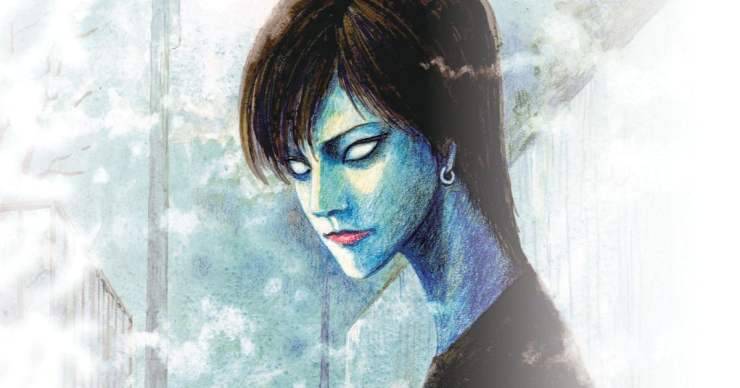
For decades, adaptations of Junji Ito’s work have struggled to capture what makes his manga so deeply unsettling — the slow dread, the grotesque anatomy, the cosmic wrongness lurking beneath everyday life. Strange, the new live-action anthology also known as Strange -Junji Ito’s Strange Stories for Sleepless Nights, looks like it might finally crack the code.
The series made its debut on July 3 on TV Tokyo, airing at 24:12 — effectively the small hours of July 4. A second screening followed on BS TV Tokyo on July 12. Before hitting Japanese airwaves, the first episode was shown to an audience at Anime Expo, where fans got their first taste of Ito’s twisted imagination rendered in flesh and blood rather than ink.
The anthology format is a smart fit for Ito’s back catalogue. His stories rarely need a sprawling arc to land their punch; instead, they thrive on a single monstrous idea taken to its logical, horrifying conclusion. A short-form live-action structure lets each installment breathe on its own terms, without stretching a nightmare thin across a full season.
Getting Ito right on screen is notoriously difficult. His art relies on static, hyper-detailed panels that let your eye linger on every disturbing curve and spiral. Live-action, by contrast, keeps moving, which risks robbing those images of their power. Early reactions to Strange suggest the production understood that tension and leaned into it — treating restraint and atmosphere as the real special effects.
It’s worth noting that Strange isn’t the only Ito project arriving this summer. A separate live-action series, Bloody Smart, is set to premiere on August 20, 2026, though the exact release day on Netflix hasn’t been confirmed. For fans, that means two very different takes on the manga master’s universe landing within weeks of each other — a good problem to have.
What sets Strange apart, at least on the evidence of its opening episode, is the sense that the people behind it are Ito readers first and filmmakers second. That distinction matters. The best horror adaptations don’t just recreate famous scenes; they understand why those scenes work, then find a cinematic language to reproduce the feeling rather than the frame.
Whether the anthology maintains that standard across its run remains to be seen. But for a body of work that has resisted so many attempts at translation, Strange represents a promising step — proof that Ito’s peculiar brand of horror can survive the leap from page to screen without losing its soul.