On World Photography Day, the Royal Navy dropped a short documentary that doubles as a quiet manifesto against synthetic imagery. Running just under 16 minutes, the film gathers serving and retired naval photographers to talk shop — and, pointedly, to explain why generative AI has no place in their line of work.
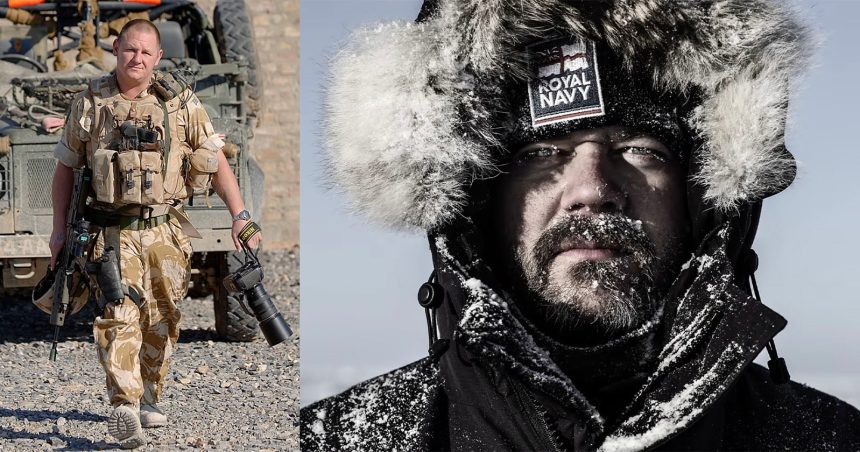
The people behind the camera have some stories. Chief Petty Officer Hoare once filmed a submarine punching up through Alaskan ice, and photographed former Prime Minister David Cameron chatting with President Obama in the Oval Office. His take on the current image landscape is blunt.
“We know that the world is flooded with imagery, but a lot of it’s not real; a lot of it is AI,” Hoare says. “We know that people that aren’t generally friendly to the U.K. are flooding this country with information that’s probably not real.”
That’s the crux of the argument. For the Royal Navy, photography isn’t just documentation — it’s evidence, and evidence has to be trustworthy. As Hoare puts it: “We don’t lie about what’s going on. We don’t lie about what we do. The important thing is you capture real life… Imagine using an AI image of made-up sailors instead of sailors who are actually doing the job.”
It’s a fair point. A diffusion model can conjure a photorealistic sailor in seconds, but it can’t be embedded with a unit, can’t wait for the decisive moment, and can’t stake its reputation on the frame being genuine.
Sean Clee, a former Royal Navy photographer who served in Afghanistan, drives that home. He was once the first person off a helicopter in Taliban territory — not to fight, but to photograph the troops disembarking behind him. His verdict on the technology is equally firm.
“AI can’t replicate what we can do,” Clee says. “It can’t go out on the ground. It can’t search out human interest stories. AI can’t find them things.”
The documentary doesn’t dwell only on the AI debate. It’s also an honest look at the job’s demands. Photographers can be deployed for months with just a couple of days’ notice, capturing everything from high-profile diplomacy to the far heavier moments — including funerals.
Royal Navy photographer Helayna Birkett describes the emotional weight of that work. “Even if I don’t know the person, just seeing the family’s grief, seeing the family’s emotions, some people get affected by that more than others, and I know that I definitely do get affected by it,” she says.
And that, perhaps, is the sharpest counterpoint to any generative model. Beyond authenticity and physical presence, human photographers bring something no neural network can fake: the capacity to actually feel what they’re documenting. In an era of infinite synthetic pictures, the Royal Navy is betting that reality — and the people willing to risk a lot to capture it — still matters most.