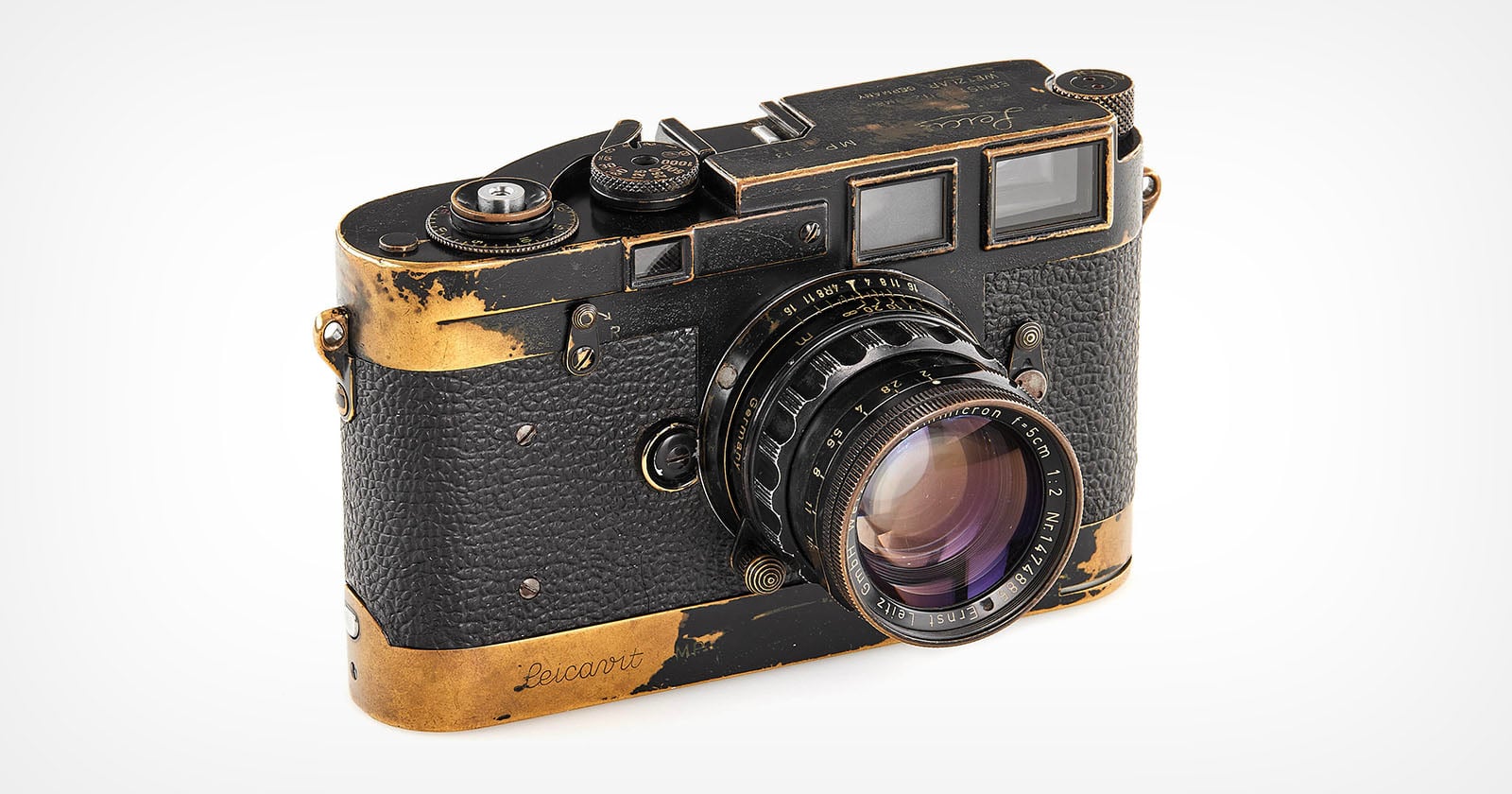
Some cameras are tools. Others are trophies. And every so often, one becomes an outright legend — the kind that collectors will empty their bank accounts to own. That’s exactly what happened at the 48th Leitz Photographica Auction, where an ultra-rare Leica MP Black Paint changed hands for nearly $700,000.
For those who don’t live and breathe vintage rangefinders, that number might seem absurd for something you point at the world to capture light. But the Leica MP isn’t your everyday shooter. The black paint finish is the holy grail among Leica enthusiasts — far scarcer than the chrome variants, prone to wearing into that gorgeous, brassy patina that collectors prize above almost anything else. Originality, condition and provenance all stack up to push prices into stratospheric territory, and this particular example clearly ticked every box.
The sale was the headline act of an event that has become a fixture on the calendar for anyone who treats photographic history as something worth preserving — and bidding on. Over the weekend, collectors poured serious money into rare and classic cameras, vintage lenses, and assorted pieces of photographic culture. The auction has built a reputation as the place where the most coveted Leica gear surfaces, and where eye-watering hammer prices are less the exception than the rule.
What makes a camera like this so desirable? It comes down to a few intertwined factors:
- Rarity — black paint Leicas were produced in limited numbers, making surviving examples hard to find.
- Mechanical purity — the MP is a fully manual, all-mechanical rangefinder, built to be used, not babied.
- That patina — honest brassing tells a story, and collectors love a camera that wears its history on its sleeve.
- Provenance — a documented history can transform a desirable object into a genuine grail piece.
It’s a fascinating corner of the gadget world, where the value runs entirely counter to the usual tech logic. In most of our coverage, the newest sensor and the fastest processor command the premium. Here, it’s the opposite: a decades-old mechanical instrument, free of menus, batteries-for-everything and firmware updates, outpricing nearly anything you can buy new today.
The result is also a reminder of just how much heritage Leica carries. The brand has spent a century building cameras that photographers and collectors treat as objects of devotion, and auctions like this prove the appetite hasn’t cooled. When a single body can approach $700,000, you’re not really looking at a camera anymore — you’re looking at a slice of photographic history that someone wanted badly enough to pay a fortune for.