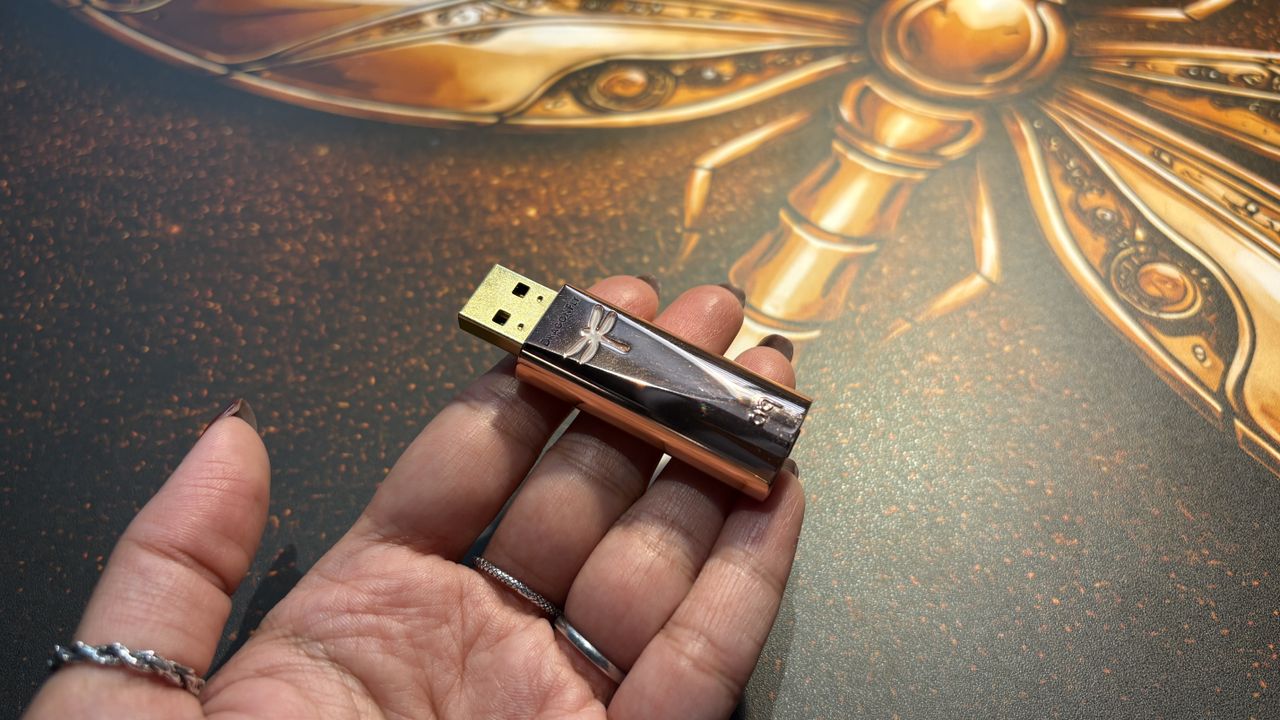
The little USB stick that taught millennials to care about audio fidelity is back in the conversation, and this time AudioQuest is candid about the challenge ahead. The original DragonFly earned its reputation as a gateway drug for better sound: plug it into a laptop, bypass the mediocre internal audio chip, and suddenly your headphones reveal detail you didn’t know was there. It was simple, portable and — crucially — affordable enough to tempt people who’d never thought of themselves as hi-fi obsessives.
Now the question is whether the same trick works on a generation raised on streaming, Bluetooth earbuds and music consumed almost entirely through a phone. AudioQuest, to its credit, isn’t pretending to have cracked the code. As the company puts it, “it would be disingenuous to say that we have a plan for attracting younger music fans.” That’s a refreshingly honest admission in a category where every brand claims to know exactly what Gen Z wants.
The tension is real. The DragonFly’s whole pitch rested on a wired connection to a computer — a workflow that made perfect sense in the laptop-centric world of the early 2010s. Today’s younger listeners often don’t own a traditional PC setup at all, and the headphone jack has quietly vanished from most flagship phones. A device built to be the easiest possible on-ramp to good sound now has to reckon with a landscape where convenience means wireless, and wireless rarely means audiophile-grade.
Still, there’s an argument that the appetite for quality hasn’t disappeared so much as gone dormant. Vinyl’s improbable resurgence among twenty-somethings suggests that younger fans aren’t allergic to deliberate, tactile listening — they just need a reason to slow down and pay attention. A compact DAC that demonstrably improves what they already hear could find a foothold, provided it meets them where they actually listen.
That’s the puzzle AudioQuest faces with a new DragonFly: how do you sell the value of fidelity to people who have never experienced its absence as a problem? The millennials who adopted the first model were often coming from CDs and ripped MP3s, and could hear the upgrade instantly. For a generation weaned on lossy streams and tiny earbud drivers, the contrast may be less obvious — or it may be a revelation waiting to happen.
What makes this interesting isn’t a spec sheet but a strategic gamble. The DragonFly line proved that a thumb-sized accessory could change how an entire demographic thought about sound. Whether the formula scales to a new audience — one with different devices, different habits and different expectations — is genuinely open. AudioQuest seems to know it’s experimenting rather than executing a master plan, and that honesty may be the most encouraging sign of all.